
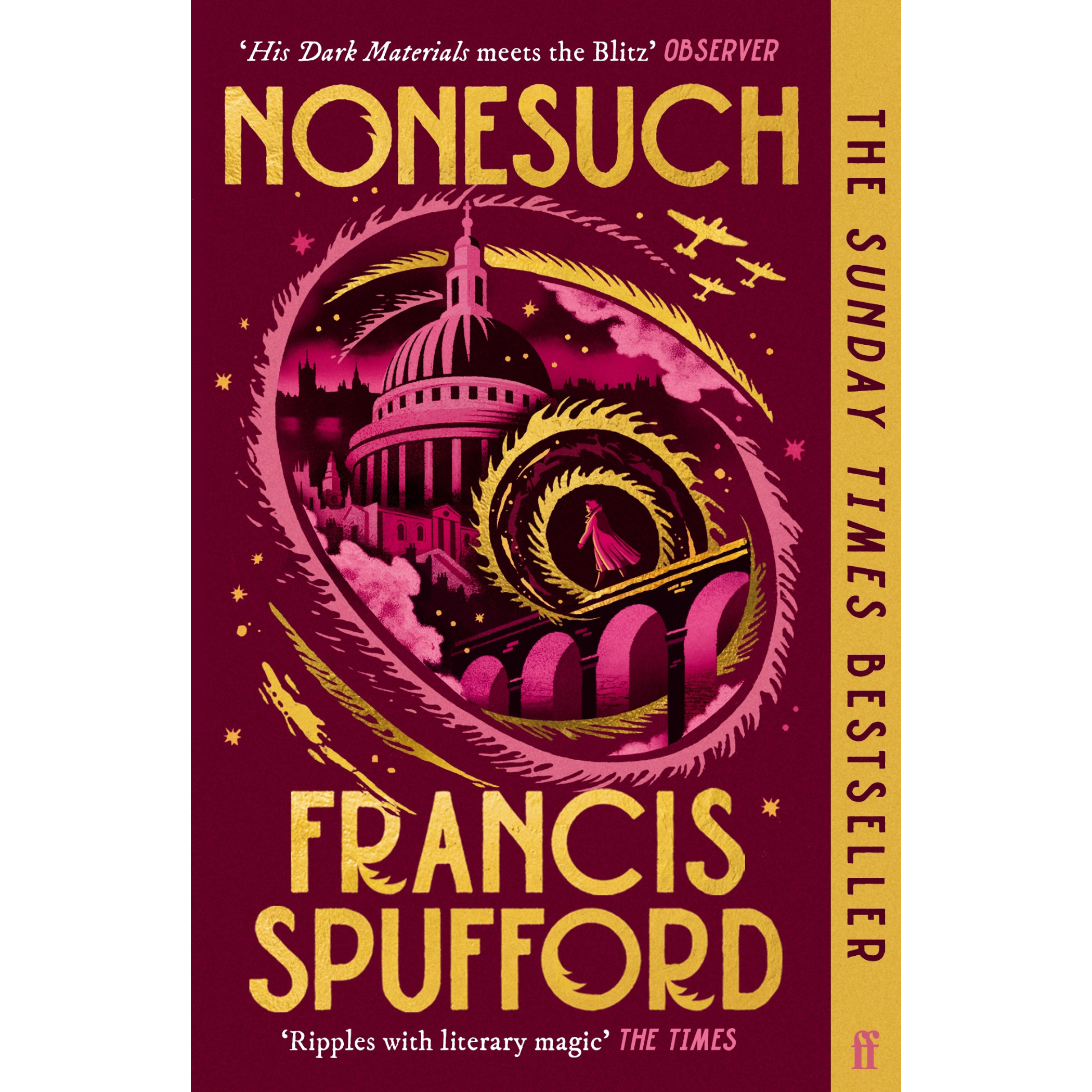
Nonesuch | By Francis Spufford
It's the summer of 1939. London is on the brink of catastrophic war. Iris Hawkins, an ambitious young woman in the stuffy world of City finance, has a chance encounter with Geoff, a technical whizz at the BBC's nascent television unit.
What was supposed to be one night of abandon draws her instead into an adventure of otherworldly pursuit - into a reality where time bends, spirits can be summoned, and history hangs by a thread. Soon there are Nazi planes overhead. But Iris has more to contend with than the terrors of the Blitz.
Over the rooftops of burning London, in the twisted passages between past and present, a fascist fanatic is travelling with a gun in her hand. And only Iris can stop her from altering the course of history forever.
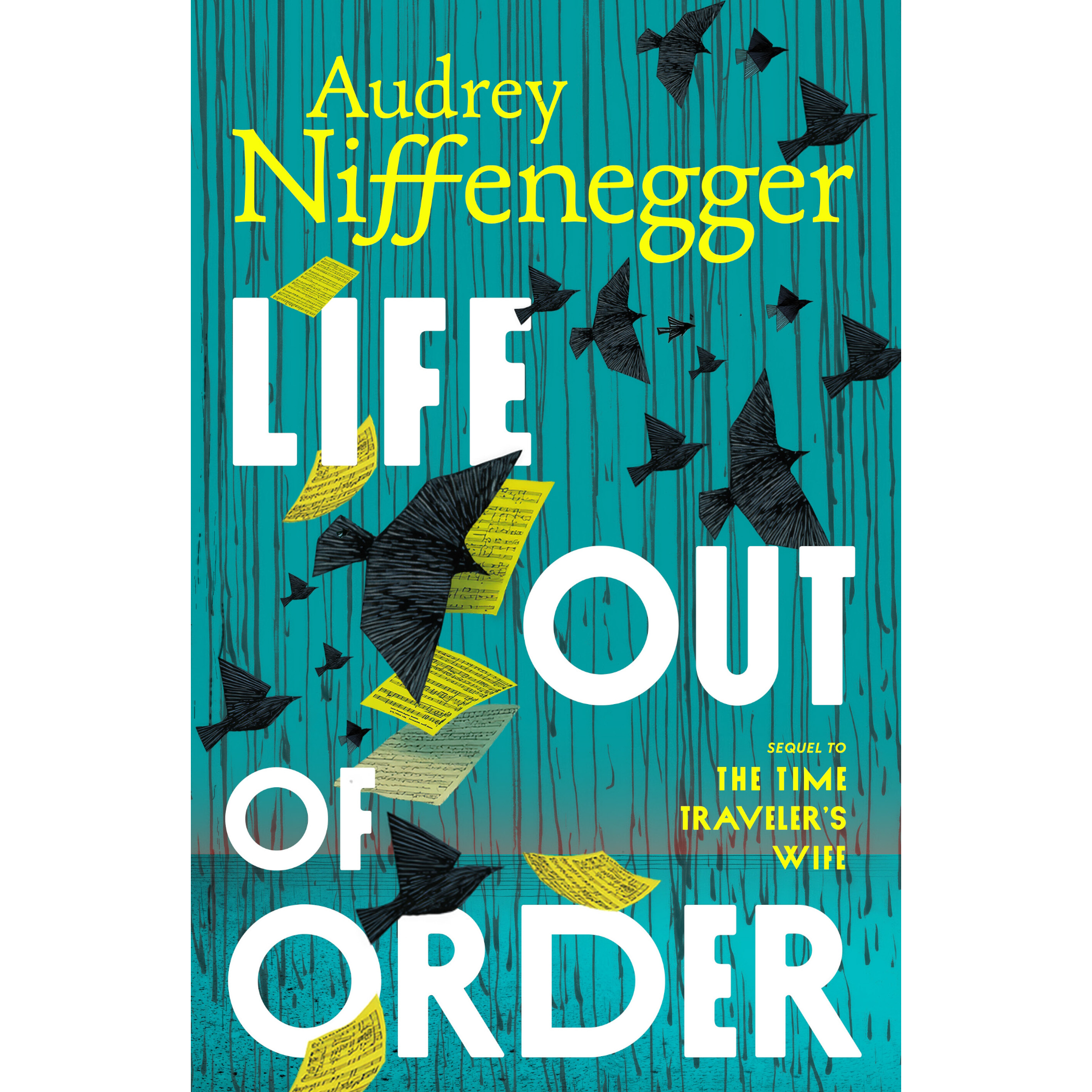
Life Out of Order | By Audrey Niffenegger
Two great loves. A world in chaos. And a life that never lands in order.
Alba DeTamble is a time traveler, slipping unpredictably through decades like her father before her. But the hardest thing she carries isn’t the burden of futures she can’t understand, or pasts she cannot change – it’s a secret: she is in love with two different people. Each of them offers a different life.
Zach lives in the present and can’t follow her when she disappears. Oliver can travel through time, just like she can. As Alba careens from time to time, moving from the riot-torn Chicago streets of her present to the eerie, timeless Yellow House, and into the digital corridors of the Museum of Lost Souls and a flooded future London, she must face a question she can no longer avoid: how is it possible to love, and live a meaningful life, in an increasingly troubled, fractured world?
Intimate and expansive, Life Out of Order is a kaleidoscopic story of love, resilience and hope when time is running out.
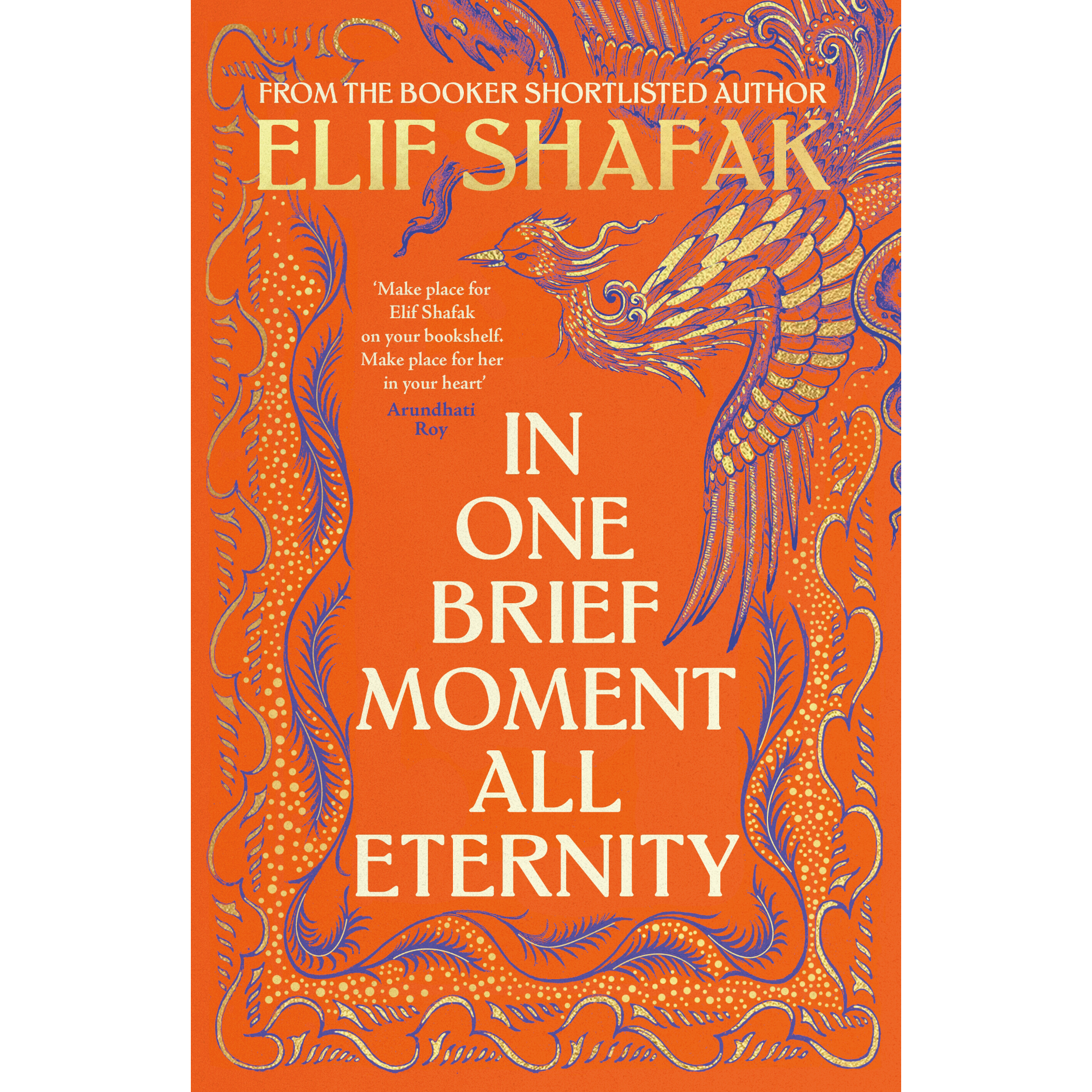
In One Brief Moment All Eternity | By Elif Shafak
During a time of great turmoil, Gustave Flaubert created literature's most scandalous heroine: Madame Bovary. He then poisoned her with arsenic. But what if, 175 years later, Emma – and the women history overlooked – could seize the quill from his hands and tell a different story?
In One Brief Moment All Eternity is a luminous reinvention of an iconic male writer, told through the eyes of the women – real and fictional – who shaped him: a devoted nursemaid, an Egyptian dancer and a passionate, jealous lover who refuses to be forgotten.
Through their voices, visionary author Elif Shafak creates both an intimate portrait of a great artist and an epic meditation on storytelling itself: who gets remembered, who gets erased, and how can literature endure through political upheaval, war and injustice? When the world feels broken, how do we find the hope to carry on?
Shafak takes readers on an extraordinary journey through time and space, from Flaubert's unusual childhood in a house that was part home, part hospital, part morgue, to nineteenth-century Paris during the Revolution, and onwards to Istanbul, Cairo, Palestine and Beirut. In this exhilarating tale, the questions at the heart of her work take on a thrilling new urgency: who gets to speak, and what would the silenced have said?
Boldly inventive, transporting and illuminating, spanning decades and continents, In One Brief Moment All Eternity is a dazzling love letter to literature, untold stories, neglected communities and the enduring spirit of humanity.
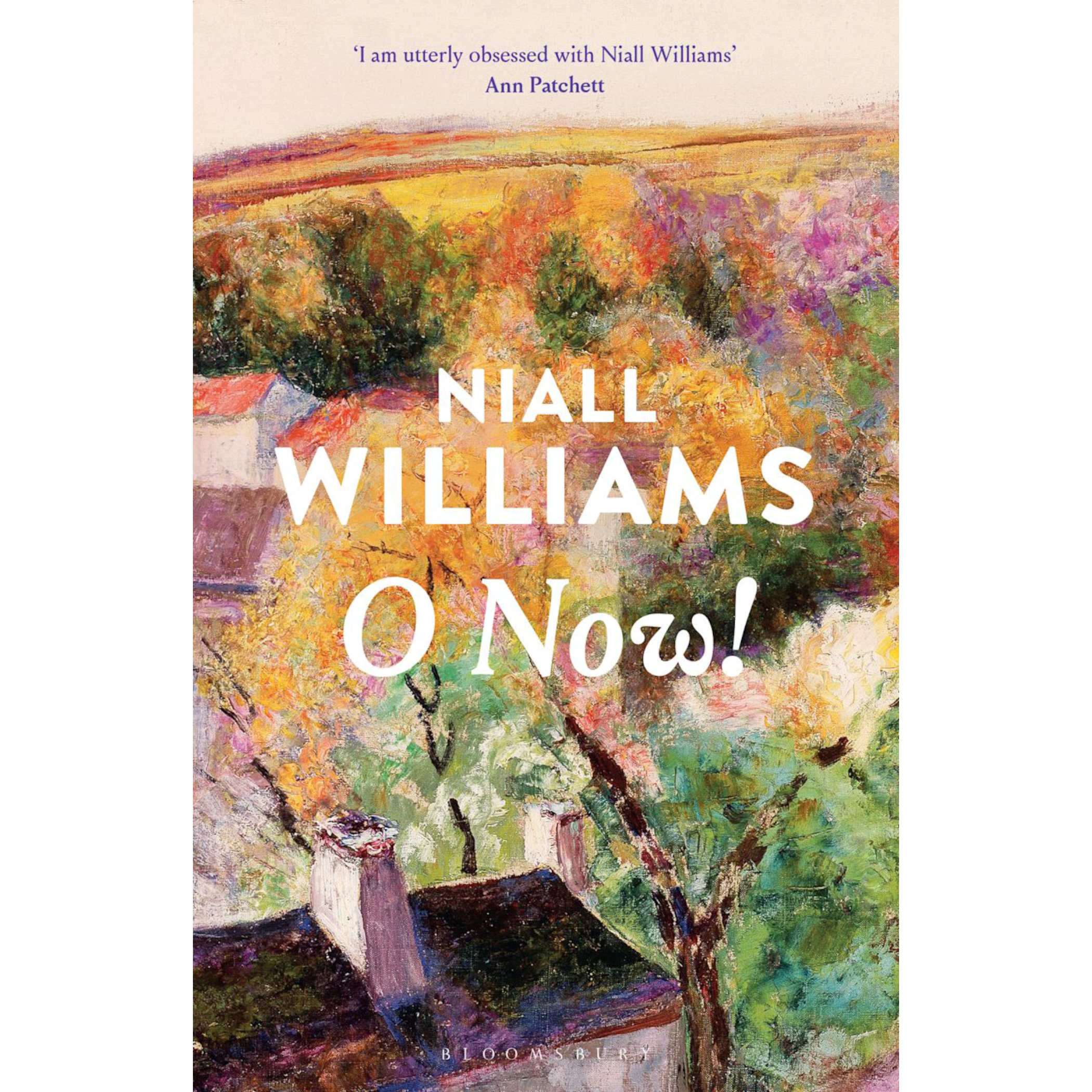
O Now! | By Niall Williams
'This is the why of us'.
October in the parish of Faha, County Clare – the beginning of the season of spirits. Four nights a week, Bat Considine calls on his neighbour Mossie Crowe; a beloved widower known to all in the townland of Faha as Ganga.
They sit by the fire and, as Bat reads the newspaper aloud, wait to see which of them will die first. But this week, Bat will make a discovery that changes this routine forever. In the coming days, Ganga’s small community will gather, and his family travel home from far away; to celebrate a quiet life, in all its miracles.
Funny, beautiful, transcendent and wise, O Now! leads readers back down the road that leads to Faha – and explores what it means to live a meaningful life, and what it means to leave it behind.
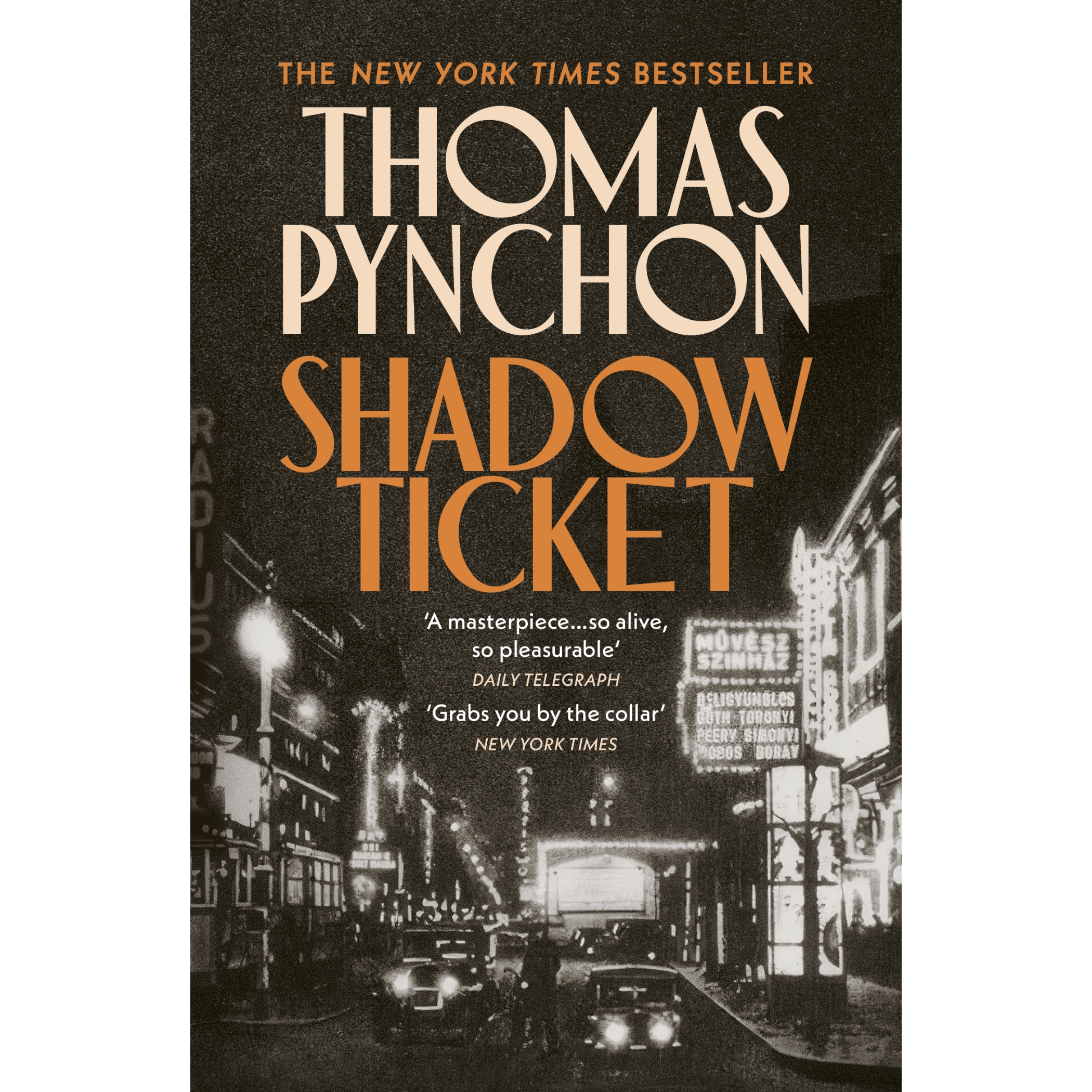
Shadow Ticket | By Thomas Pynchon
Milwaukee 1932, the Great Depression going full blast, repeal of Prohibition just around the corner, Al Capone in the federal pen, the private investigation business shifting from labour-management relations to the more domestic kind. Hicks McTaggart, a onetime strikebreaker turned private eye, thinks he’s found job security until he gets sent out on what should be a routine case, locating and bringing back the heiress of a Wisconsin cheese fortune who’s taken a mind to go wandering. Before he knows it, he’s been shanghaied onto a transoceanic liner, ending up eventually in Hungary where there’s no shoreline, a language from some other planet, and enough pastry to see any cop well into retirement – and of course no sign of the runaway heiress he’s supposed to be chasing.
By the time Hicks catches up with her he will find himself also entangled with Nazis, Soviet agents, British counterspies, swing musicians, practitioners of the paranormal, outlaw motorcyclists, and the troubles that come with each of them, none of which Hicks is qualified, forget about being paid, to deal with. Surrounded by history he has no grasp on and can’t see his way around in or out of, the only bright side for Hicks is it’s the dawn of the Big Band Era and as it happens he’s a pretty good dancer. Whether this will be enough to allow him somehow to Lindy-hop his way back again to Milwaukee and the normal world, which may no longer exist, is another question.
Partita | By Barbara Kingsolver
A song without any answer in it? That's the sound of waiting. Livia Bohusz misses her brother, Cyrus.
Unmoored by his death, and the stifling silence of the family farm, eleven-year-old Livia has no choice but to survive. Her only solace: music, an escape in the quiet rapture piano practice brings. The promise of a new life her talent offers, intoxicating.
So when Livia starts her college music scholarship it feels as if a new life might begin. Immersing herself in her passions in a world where she excels, even as she struggles to fit in with more urbane classmates, she glimpses the possibilities of a life beyond the farm and her parents. Then one springtime, as the smell of reviving grass and crocuses and the sounds of songbirds fill the air, Livia catches a glimpse of shirt sleeves rolled to the elbow, muscles you wouldn't miss in the rear view: 'Who is that man?' It is a question Livia may come to wish she had never asked.
From one of the greatest writers alive comes Livia's story, Partita, both a coming-of-age narrative and an examination of midlife hopes and regrets, a novel as simple as love and longing, as touching, complex and finely tuned as the music it celebrates.
The Fathership | By Glenn Bech | Translated by Hazel Evans
When Glenn is five years old and his younger brother, René, is three, their father commits suicide. In the void left by this incomprehensible loss, the family is shaped by a succession of men who move in and out of their lives. Deconstructing the enormous, destructive power unleashed by suicide, Glenn Bech attempts to find a language for a past that refuses to be remembered.
Through fragments of poetry, letters, and home-video transcripts, The Fathership is a brutal and dazzling work of social realism that stretches the definitions of autofiction to breaking point; a sorrowful and furious documentation of a family in crisis and a psychological search for a father known only through his absence.
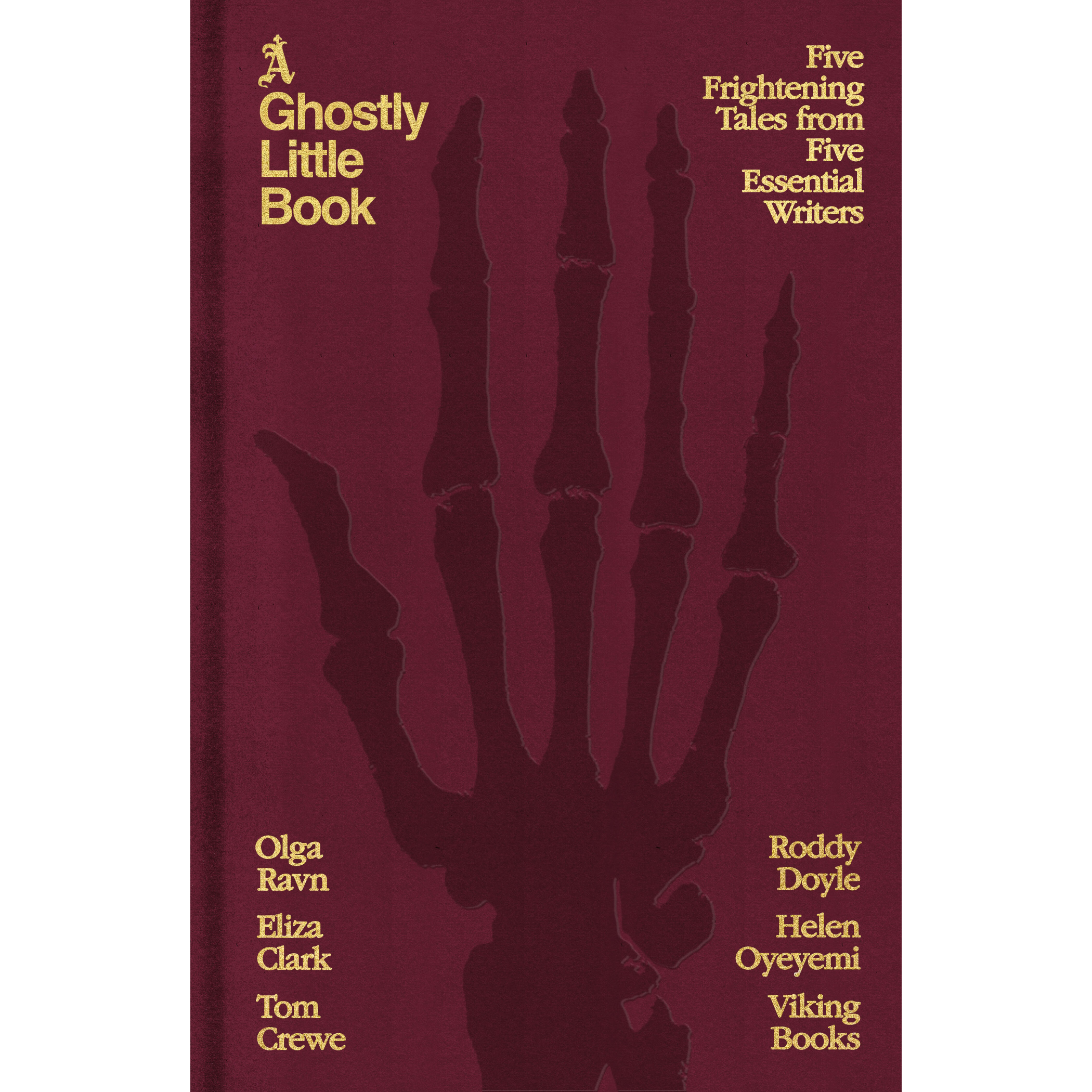
A Ghostly Little Book: Five Frightening Tales from Five Essential Writers | By Olga Ravn, Roddy Doyle, Eliza Clark, Tom Crewe, Helen Oyeyemi
From Edgar Allan Poe to Charles Dickens, from Shirley Jackson to Toni Morrison, the greatest writers have always been drawn to that ancient, mysterious thing: the haunting. A Ghostly Little Book is a slim, beautiful testament to the enduring appeal of the spook, a landmark collection of specially composed modern ghost stories from Roddy Doyle, Olga Ravn, Eliza Clark, Tom Crewe and Helen Oyeyemi, five of the most acclaimed and exciting authors at work today.
With surprising scares and anguished apparitions, with chance encounters, spectral phones and vengeful spirits, these tales chart the many twists and turns the ghost story might take: strange, unsettling, heartwarming, hilarious and, of course, blood-chilling.
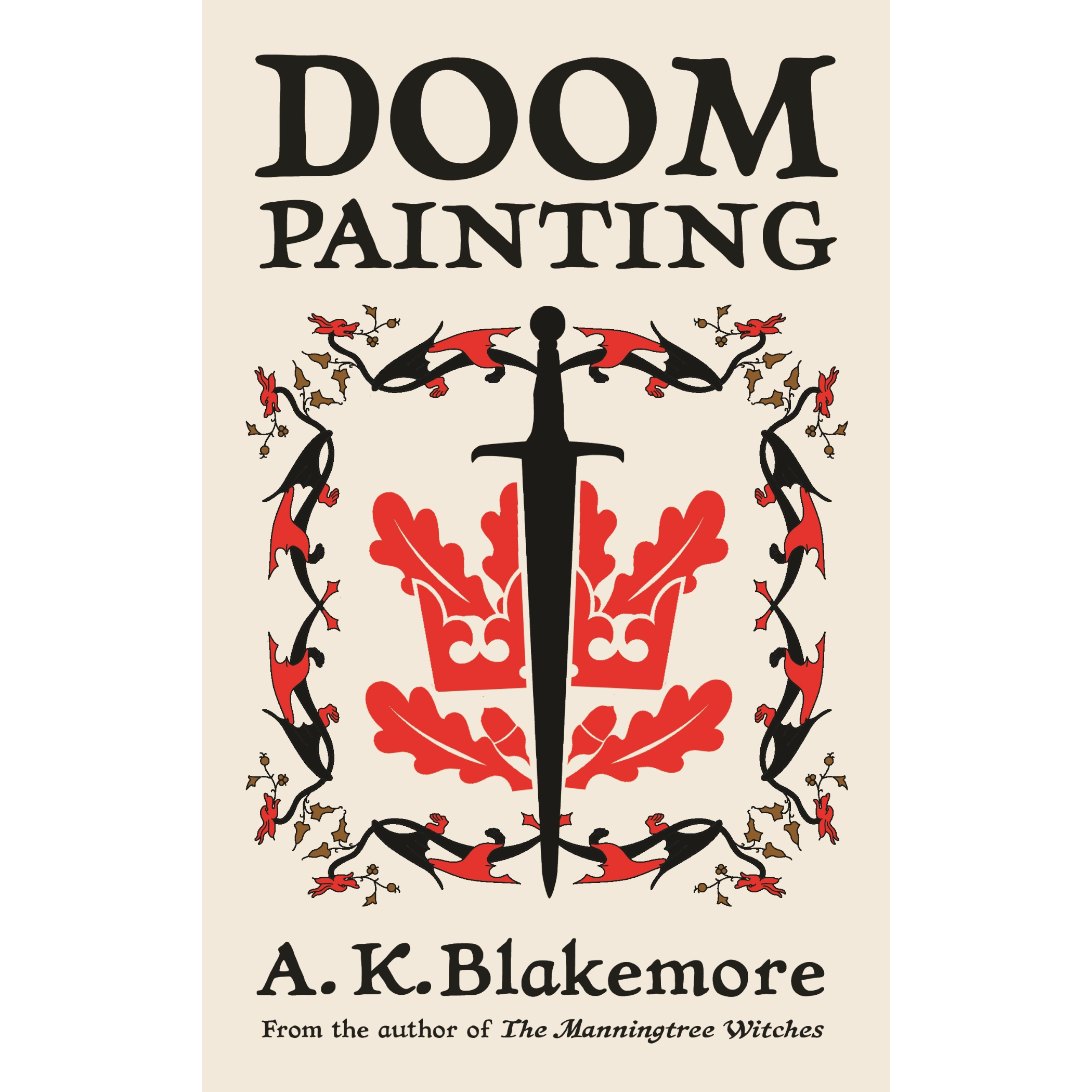
Doom Painting | By A.K. Blakemore
It is 1381. England, reeling from plague and years of conflict abroad, is a tinderbox waiting to spark.
Two childhood friends ride into the town of Brentwood, Essex, where they come upon an altercation with a local Justice bent on squeezing more coin from the masses. Thus begins a rebellion of the common folk - loyal to the king, but not to those wealthy landowners who curtail their freedoms; the multitude finding cause against the powers that threaten their livelihoods. Set over sixteen days, Doom Painting roves across England as the revolt grows and swells and the rebels march to London to take their demands to the child-king Richard II.
Out of the rebellion emerges its enigmatic and charismatic leader Wat Tyler, an opportunistic and mercurial rogue whose morality is birthed by the cause, and who shapes an identity for the English which has never been lost. A. K.
Blakemore's thrilling retelling of the Peasants' Revolt renders it a definitive moment in British history. In the meeting of peasantry and nobility, new versions of England are born, and - for one bloody summer - the people of England seize control.
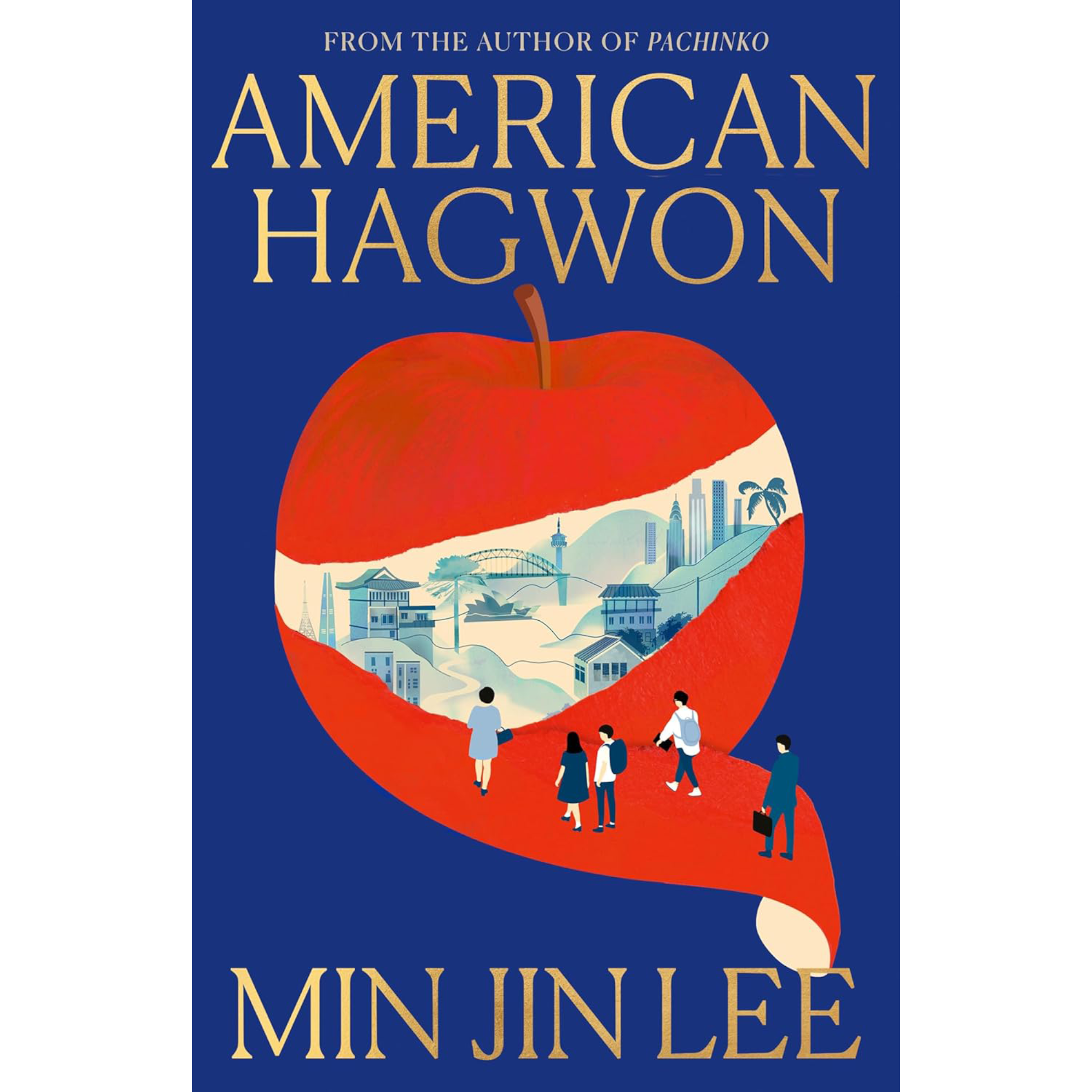
American Hagwon | By Min Jin Lee
John and Helen Koh and their three children – Bo, DH and Mido – are building new lives in Korea when they find their worlds upended, first by a terrible betrayal and then by the 1997 Asian financial crisis. Striving to regain their footing, the Kohs set out to do whatever it takes to provide for their children’s futures.
They leave Seoul for Sydney and eventually settle in California, where new opportunities open for the Koh children, as the parents, strangers in a strange land, adjust to a difficult existence in which their qualifications mean little. Their way forward is lit by the faith that education will lead the next generation to the success and security that have eluded their parents. The Kohs, their friends, relatives and even their foes move in and out of each other’s lives as they navigate love, work, fortune and fulfilment across the years.
But with each new sacrifice and fresh horizon, larger questions begin to open up before them: what are we willing to give up to secure the happiness of the ones we love? What is the purpose of education? And what is truly important for a good life?
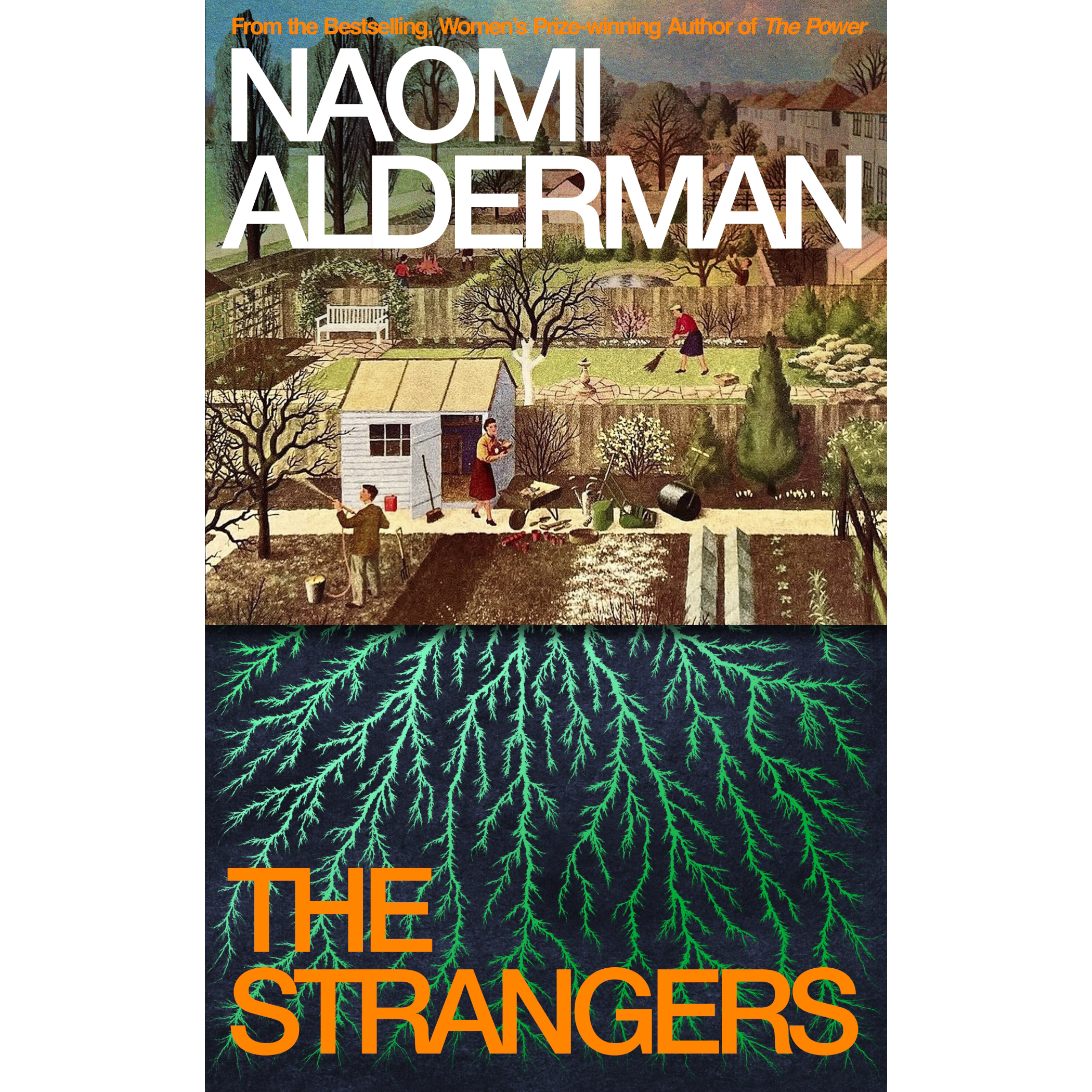
The Strangers | By Naomi Alderman
They had come from nowhere, and now they were everywhere.
A few months after her mother dies, the novelist Naomi Alderman sets up a wildlife camera in the back garden of her parents’ home. It captures the first image of a strange new animal. Low to the ground, about the size of a badger, flat face, long trunk-like nose. Suddenly these ‘mimmoths’ are as common as foxes or dogs. And no one knows where they’ve come from.
As Alderman negotiates the territory of grief – a place with its own logic and rhythms – the mimmoths spread. From the UK east and west, to the United States, to Russia, to India. They seem harmless, but oddly intelligent. They cannot be captured, they will not take food from humans, they have their own purposes. Alderman cannot shake the feeling that she has a particular connection to the creatures.
Or is she just succumbing to ‘mimmoth psychosis’? As the impact of the mimmoths increases, she is pulled into the cross currents of conspiracy theories and global power struggles. Have her deeply personal forms of mourning lent recent events a surreal air, or is our reality changing drastically and irrevocably?
The Strangers is a thrillingly original and devastatingly moving novel that blurs the lines between fiction and reality, inviting us to reconsider what it means to be human. It’s like nothing you’ll have read before.
New & Featured
Fiction
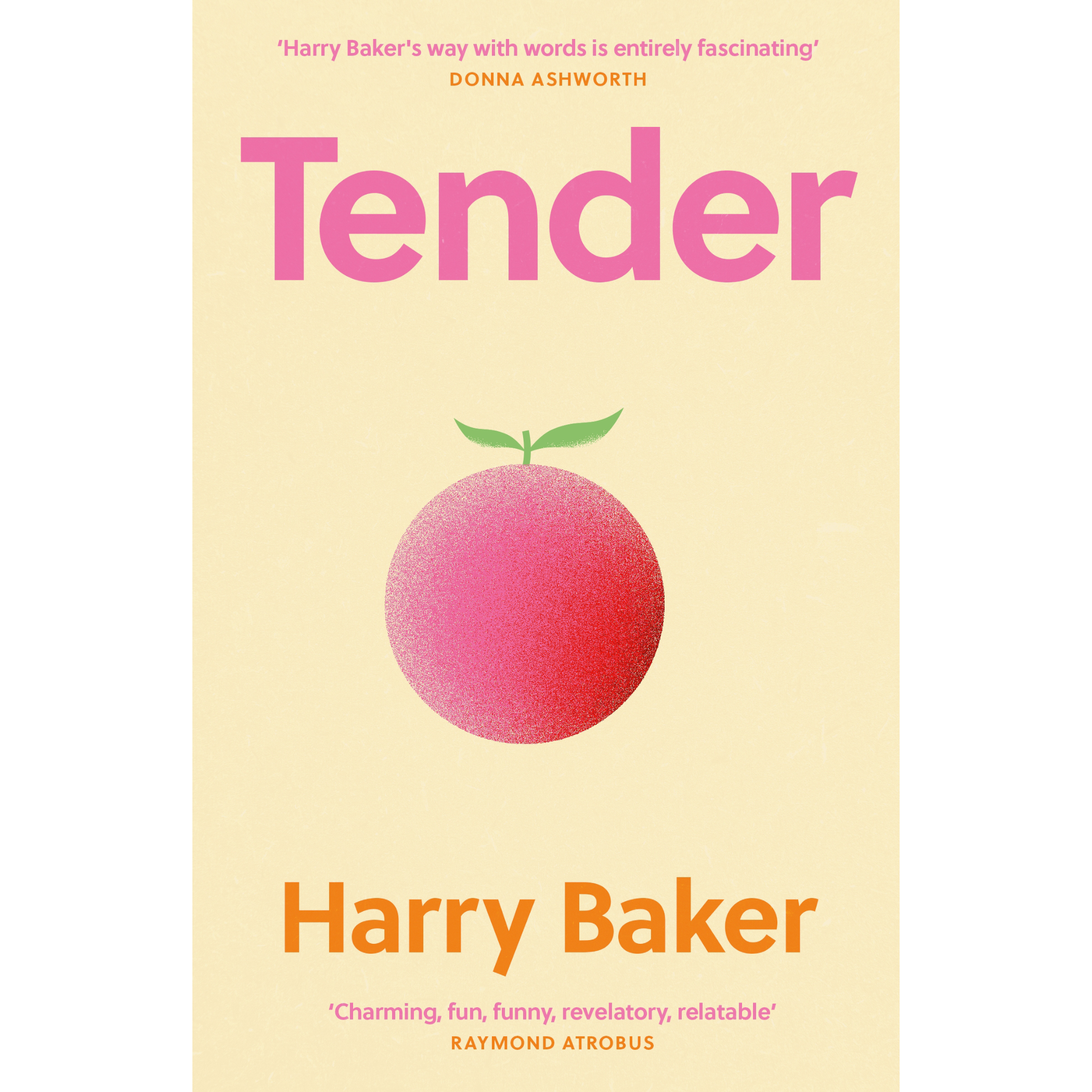
Tender: 100 poems for the first 100 days of life | By Harry Baker | Signed copies available
Tender captures all the tiny, fragile, perfect moments of new life and, with it, new parenthood. Full of sleepless wonder and with his characteristic wit and warmth, Harry Baker offers snapshots into the intense first 100 days with his son as they get to know each other. A yawn from a tiny pink mouth, a kind word from a stranger on a difficult day, the weight of a body sleeping against your chest - parents will recognise both themselves and their children in Tender and find consolation in this collection.
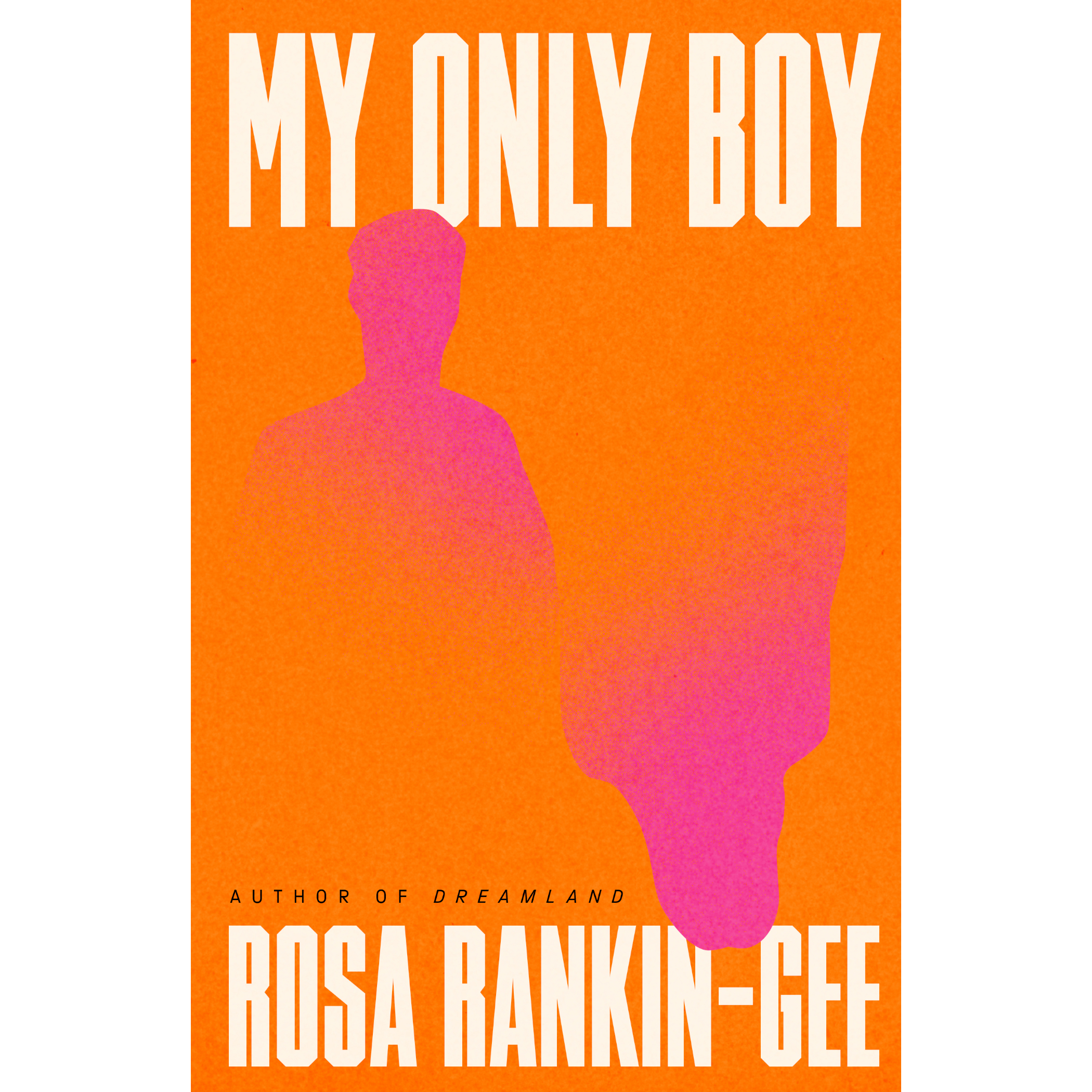
My Only Boy | By Rosa Rankin-Gee | Signed copies available
It is Elle’s job to manage disasters. But lately things have started to spin out of control. At work, the latest catastrophe has been live-streamed to the nation. A shock election sees an extreme-right coalition storm to power.
Then, on a night so hot it feels like London’s pavements are melting, she meets Ed. Elle and Ed are not meant to be drawn to each other. Elle has only ever been attracted to women, and Ed, billed as ‘the great gay novelist of our times’, is about to release his first book. But something inexplicable sparks between them. Can the unexpected attraction they feel last when it presents such a profound challenge to their identity? And as the country fractures and the heat rises, how will they choose between the people they’ve known themselves to be – and the people they are willing to become.
Both an unforgettable love story and a state-of-the-nation thriller, My Only Boy asks universal questions about desire, complicity, and what happens when your sense of self collapses along with the world around you.
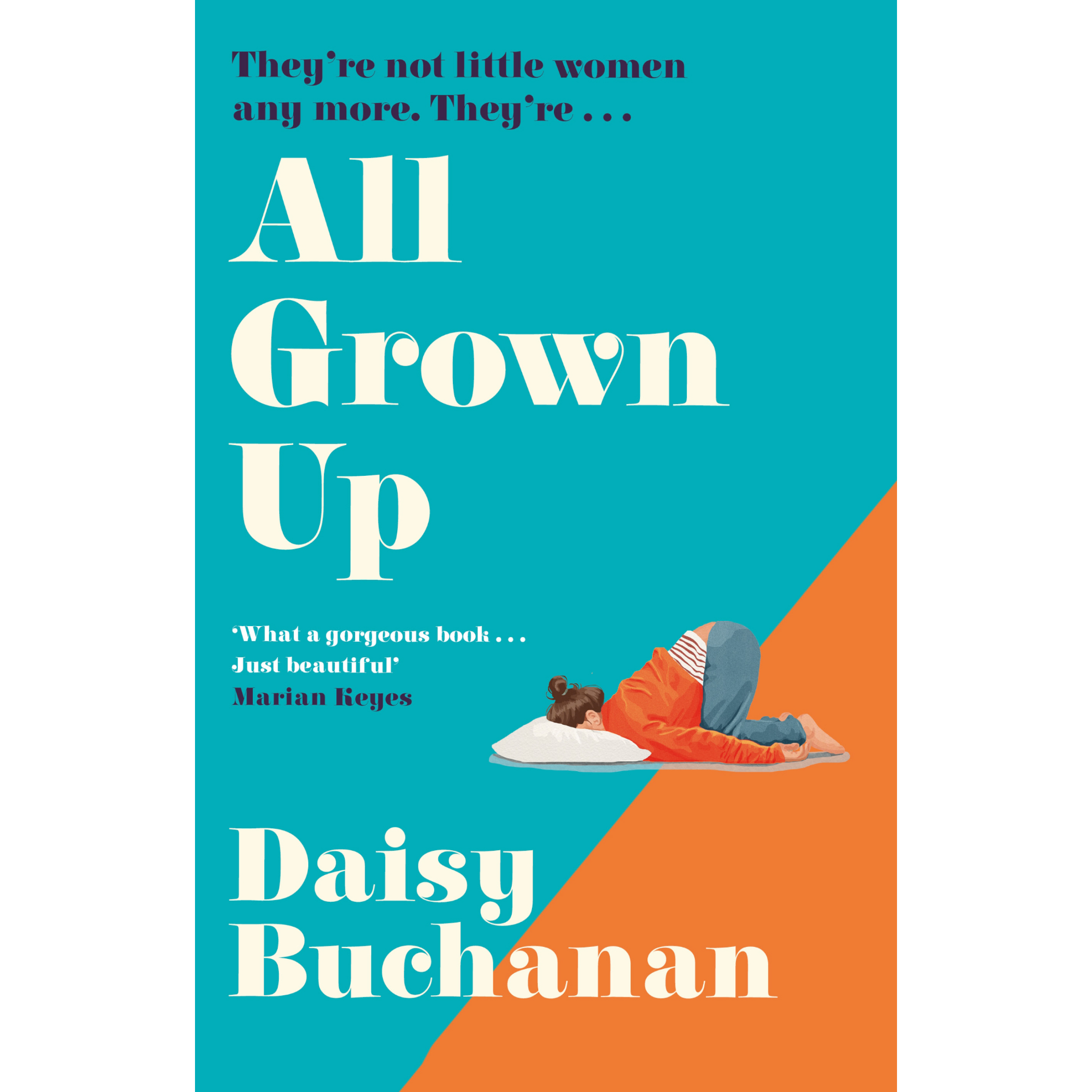
All Grown Up | By Daisy Buchanan | Signed copies available
After thirty long years, Louisa’s daughters can finally look after themselves… or so she thinks. Because suddenly, they’re back – apparently for good.
Meg’s second-guessing her marriage. Jo’s career hangs in the balance. Amy has inexplicably quit university.
None of them empty the dishwasher. Louisa knows it’s time for some life lessons. She adores her girls, but if she’s ever going to get her (sex) life back, they’ll have to grow up – and go.
But maybe they’re not the only ones with lessons to learn… And Louisa might just discover that her daughters have something to teach her about being an adult too.

Art School (in a book): A future artist's guide to contemporary art | By Russell Tovey and Robert Diament | Signed copies available
Do you love art and want to know more but don't know where to start? Introducing Art School (in a book), a virtual gallery where you can see the most exciting contemporary artists of today, as well as some of the greatest from the twentieth century, including Henri Matisse, Jean-Michel Basquiat and Frida Kahlo. And who are the visionaries, the icons, the ones to watch now? With works by Tracey Emin, Antony Gormley, and David Hockney, study the art of 20 key artists working today, find out what inspires them, how they work and the meaning behind their art.
With Russell and Robert as your guides you will also discover the artist within you, with tips on new ways of seeing and reacting to the world around you and guidance on how you can develop your own creativity.
Signed Stock
Signed Stock
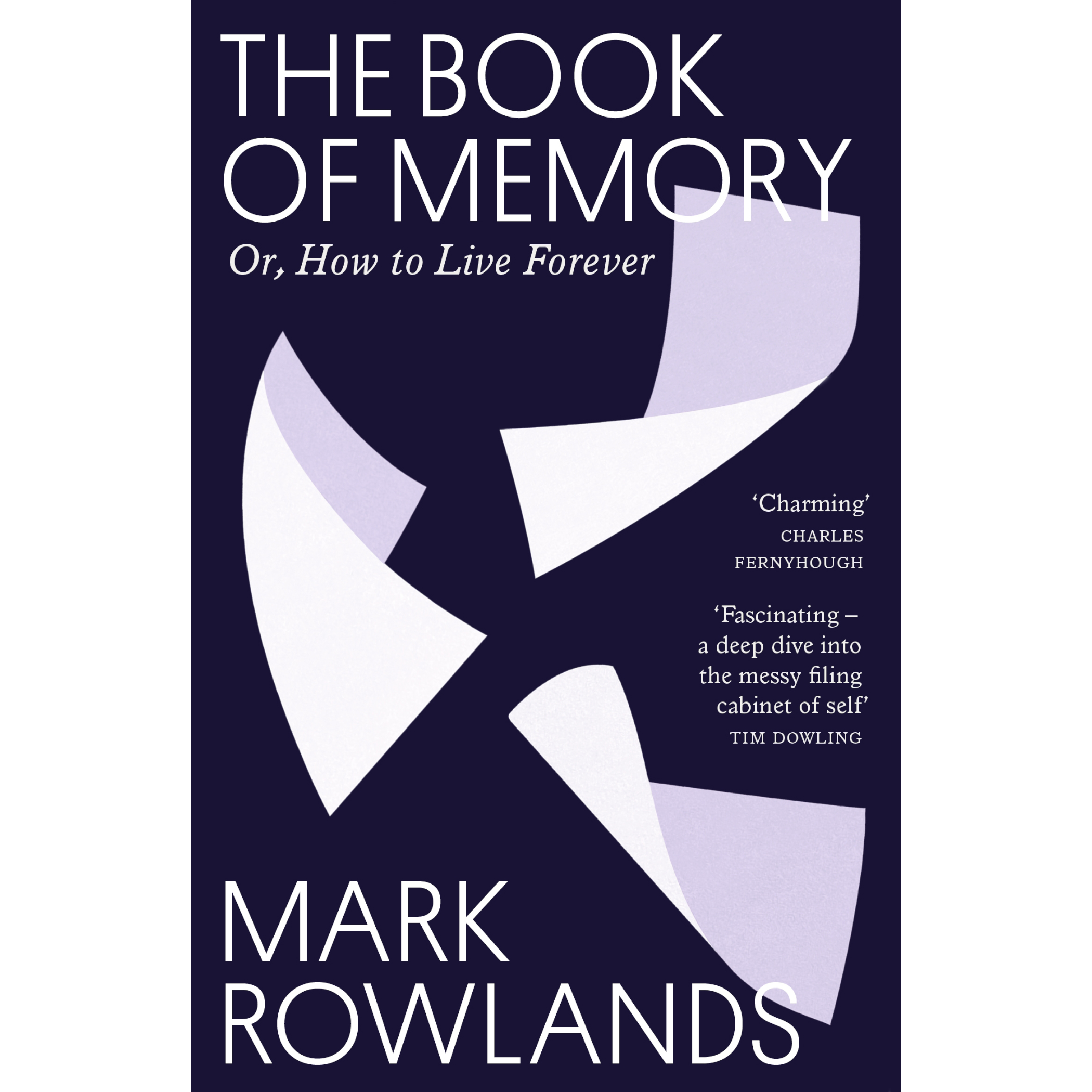
The Book of Memory: Or, How to Live Forever | By Mark Rowlands
'The book of you is dominated by night-black seas, sprinkled with shining island sentences: tiny islets of remembrance, glimmering in the night.'
Memory isn't all that we think it is. Each time we revisit even our most deeply ingrained memories, they can soften and consolidate, distorted. Yet they also carry within them the blueprint of each person's unique style.
From episodic memories like shining islands in dark water, and forgotten memories that underpin our personalities, to the memories authored by others that we carry within us, Rowlands explores our negotiations with the past and how memory makes us who we are. Drawing on the latest neurological and psychological research and on a range of writers and thinkers, The Book of Memory is a mesmerising journey into how memories are made, lost and remembered, with important consequences for how we understand ourselves.
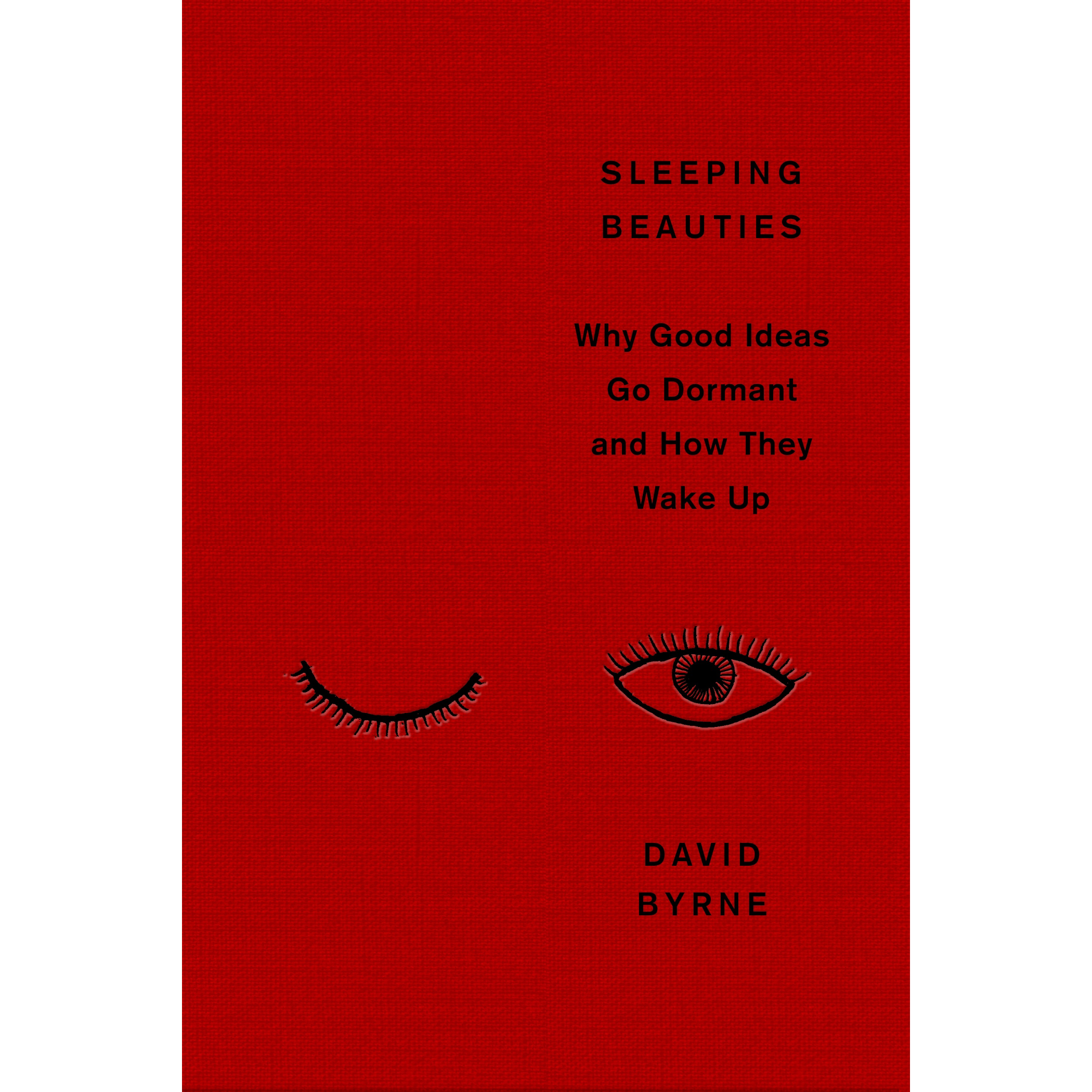
Sleeping Beauties: Why Good Ideas Go Dormant and How They Wake Up | By David Byrne
A 'Sleeping Beauty' is a brilliant idea that is ahead of its time. So many breakthroughs in arts or science were like this, lost on their initial audience and only later revived and acknowledged to be great. This book asks, why do some ideas fall asleep? And how do they wake up?
We love to believe in a meritocracy of ideas - that greatness is always recognised, innovation always seized upon and rewarded. Yet so many of the people we now recognise as the world's great creators initially got little traction for their work. It was only later, often much later, that their work comes roaring back to life and made a lasting impact. Discoveries as diverse as dark matter to continental drift, technologies from solar panels to the steam engine, artists from Brueghel to Vermeer to Melville all created 'sleeping beauties'.
Ranging across many centuries and the full scope of human endeavour, Byrne explores their stories and gives us a lens for identifying future breakthroughs. Humbling yet hopeful, these stories celebrate the courage to try new things and the wisdom to embrace them.
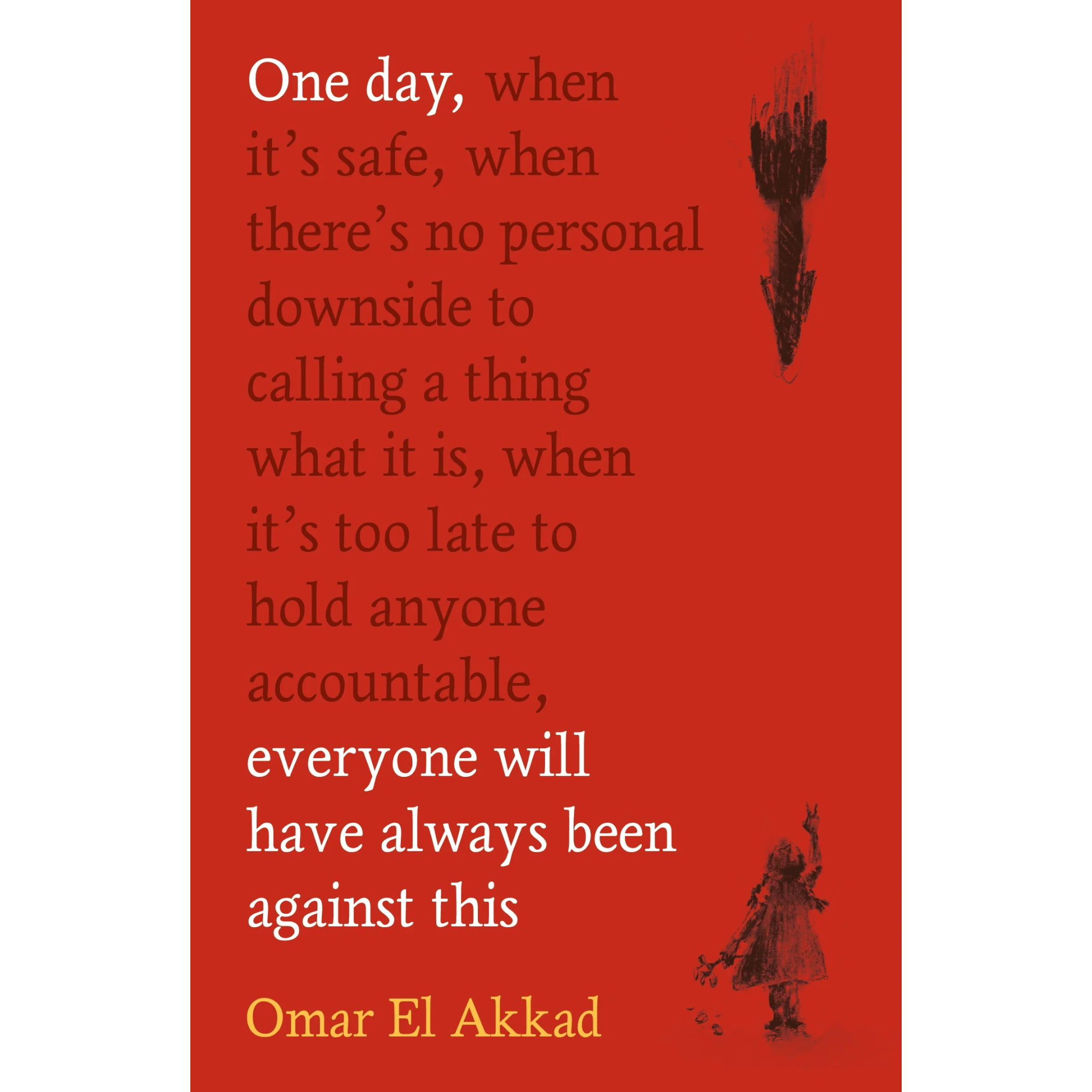
One Day, Everyone Will Have Always Been Against This | By Omar El Akkad
One Day, Everyone Will Have Always Been Against This is an urgent and necessary reckoning about what it means to live in the West today.
This is a book for those that have tired of moral emptiness.
This is a book for everyone who wants something better.
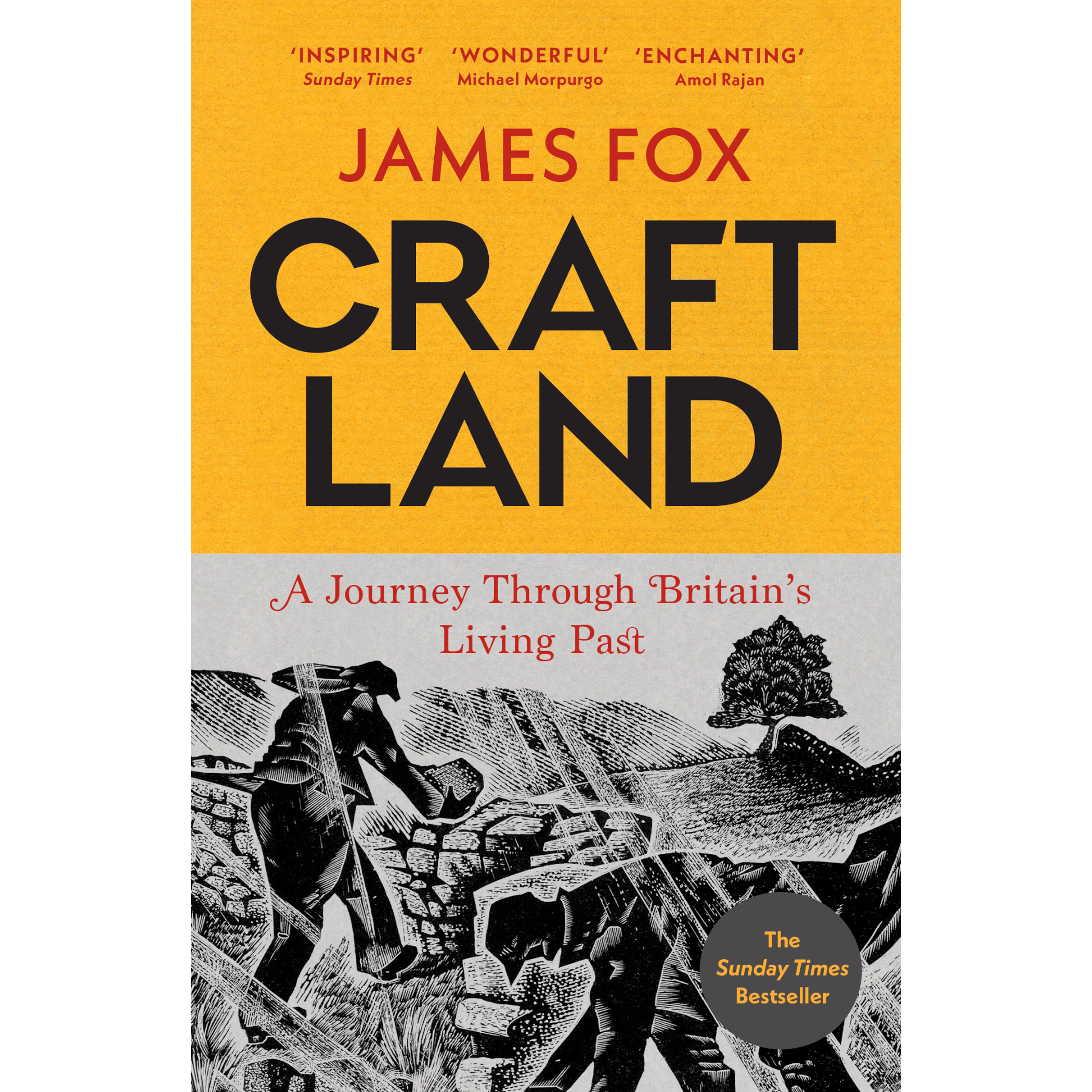
Craftland: A Journey Through Britain’s Lost Arts and Vanishing Trades | By James Fox
Britain has always been a craft land. For generations what we made with our hands defined our identities, built our communities and shaped our regions. Craftland chronicles the vanishing skills and traditions that once governed every aspect of life on these shores.
Travelling the length of Britain, from the Scilly Isles to the Scottish Highlands, James Fox seeks out the country’s last remaining master craftspeople. Stepping inside the workshops of blacksmiths and wheelwrights, cutlers and coopers, bell-founders and watchmakers, we glimpse not only our past but another way of life — one that is not yet lost and whose wisdom could shape our future.
For as long as there are humans, there will be craft. It is all around us, hiding in plain sight, enriching even the most modest things. And in this increasingly digital age, it is perhaps more valuable than ever. Craftland is a celebration of that deeply necessary connection between our creative instincts and the material world we inhabit, revealing a richer and more connected way of living.
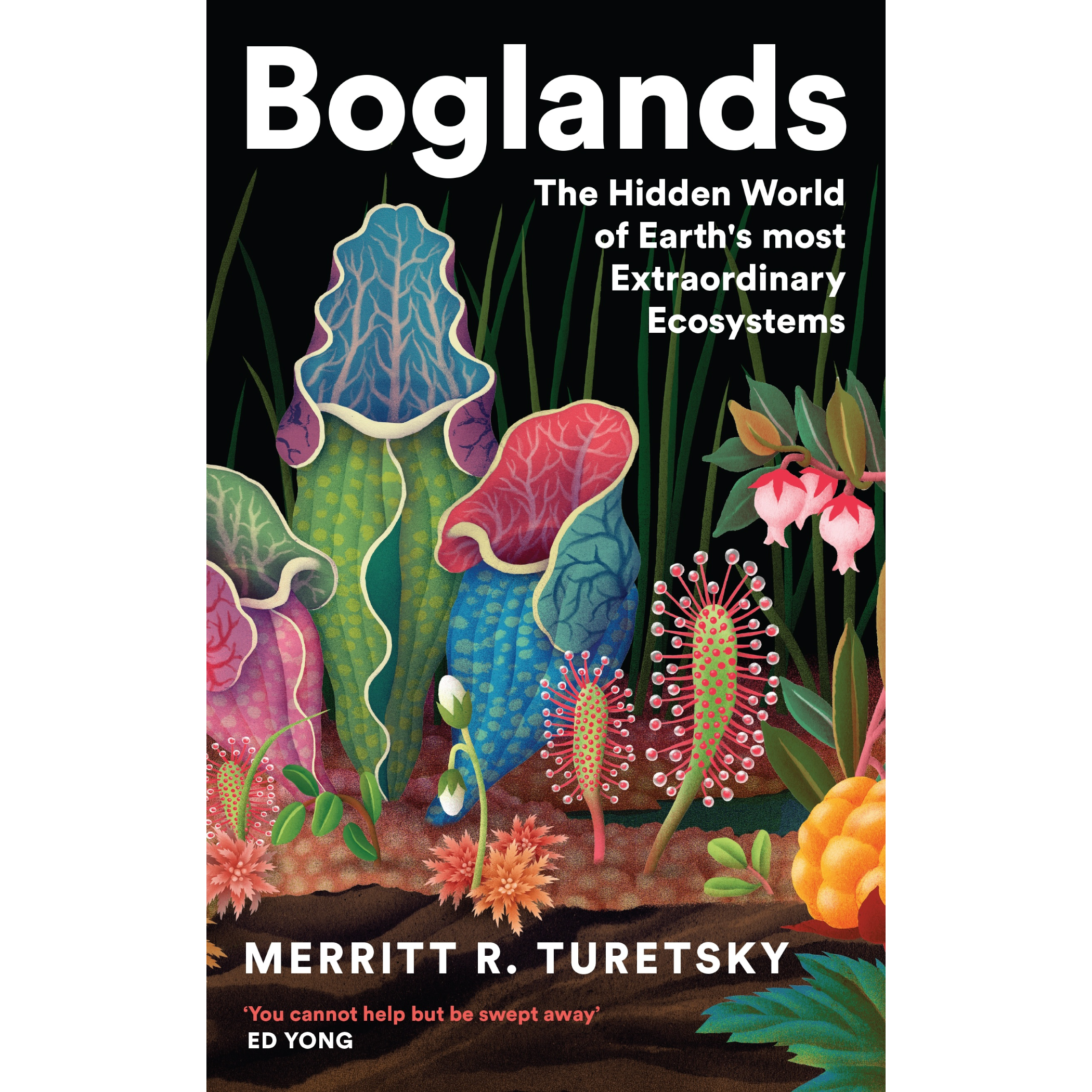
Boglands: The Hidden World of Earth's Most Extraordinary Ecosystems | By Merritt Turetsky
Step into the unearthly world of bogs. Sink beneath the surface. In this sumptuous, fecund place, what wonders await you? This is a world with an ecology like no other, where amphibian-eating plants and acid-flinging mosses grow rampant. A realm of peat, laid down layer upon layer, preserving millennia of Earth's history.
A dark, vertical landscape where the sheer abundance of carbon precariously locked away holds our very future in balance. Above all, bogs are places of paradox, where past meets present in the remarkably preserved artefacts and bodies entombed in their depths, land meets water in an otherworldly landscape, and safety meets danger for those who dare to venture into the heart of the bog.
With renowned bog ecologist Merritt Turetsky as your guide, Boglands is an invitation to enter a beguiling landscape that will irrevocably change the way you see the natural world.
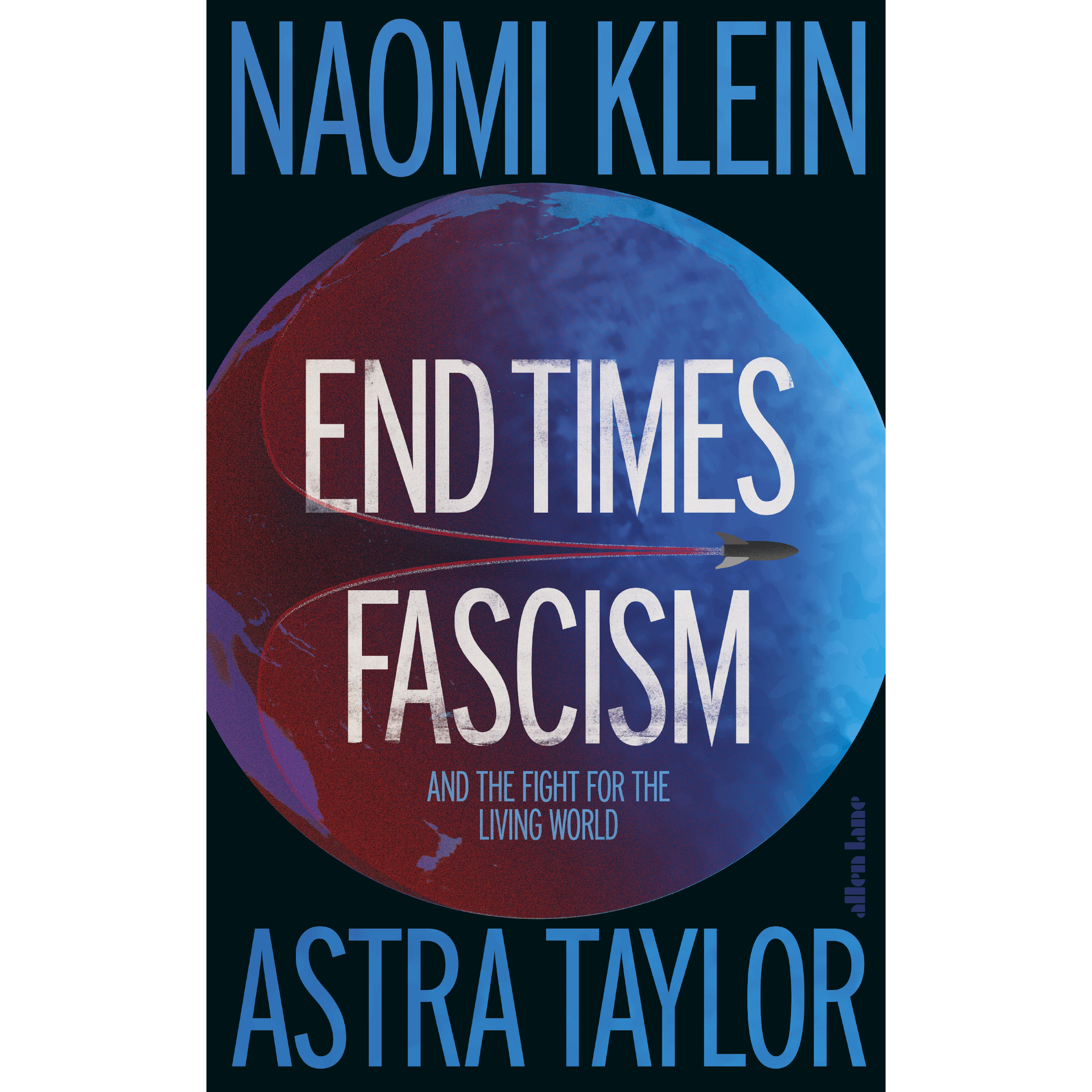
End Times Fascism: And the Fight for the Living World | By Naomi Klein and Astra Taylor
The far right is on the march again – but this time it’s different from anything we’ve seen before. A new, apocalyptic alliance of religious fundamentalists, billionaire Silicon Valley tech kings and ethno-nationalists is on the move. They’re united in their belief that some kind of cleansing cataclysm is coming, and they welcome a future of shocks, scarcity and collapse, convinced they’ll be among the saved on the other side. This is the world of End Times Fascism.
In this blistering reckoning with our age, Naomi Klein and Astra Taylor take us deep into this man-made Armageddon complex – and show us how to resist it. Around the globe, they investigate how those who are making our world unliveable through climate chaos and job-consuming AI are preparing to protect themselves from the fallout, whether it’s by repairing to luxurious private islands for the super-rich, rocketing off to Mars or bunkering nations against a dehumanized ‘other’.
But, Klein and Taylor reveal, the new supremacist survivalists are far from impregnable. They have no vision of a shared future. All they offer are remixes of a bygone past: the nihilistic, sadistic pleasures of domination.
If we’re to meet this critical moment and defend what’s left of democracy before it’s smashed up beyond repair, we must break the doom loop, and find a new way of living together, rooted in our existence on this earth, in the here and now. A story not of end times – but of better times. This book shows us how.

Fanzine: The story of football's alternative press | By Daniel Gray
Demonised and left to watch games in decrepit stadiums, life as a football supporter in the 1980s was a demoralising experience. While some fans turned to violence, many more turned to typewriters, Tippex and staple guns to create a mass movement that transformed a bleak time into a hopeful one. Adopting a DIY punk ethos, fanzine founders spread their pages across the land.
Their funny, articulate and occasionally scandalous creations were sold outside grounds from Inverness to Torquay, with most British clubs covered – sometimes by multiple titles. These inky mouthpieces questioned the old order, frightening those who ran the game and provoking many a banning. Through extensive archival research and interviews, Fanzine tells the story of the phenomenon during its boom years.
It offers an alternative history of football in a monumental period – from Heysel to the Premier League, via Hillsborough and Italia ’90 – as witnessed from the stands. Deploying fans’ colourful and often sardonic words, Fanzine transports readers back to the terraces of old, for better or worse – bad Bovril and suspect pies are never far away. Told in book form for the first time, Fanzine is the poignant, nostalgic and absorbing story of an era that changed going to the match forever.
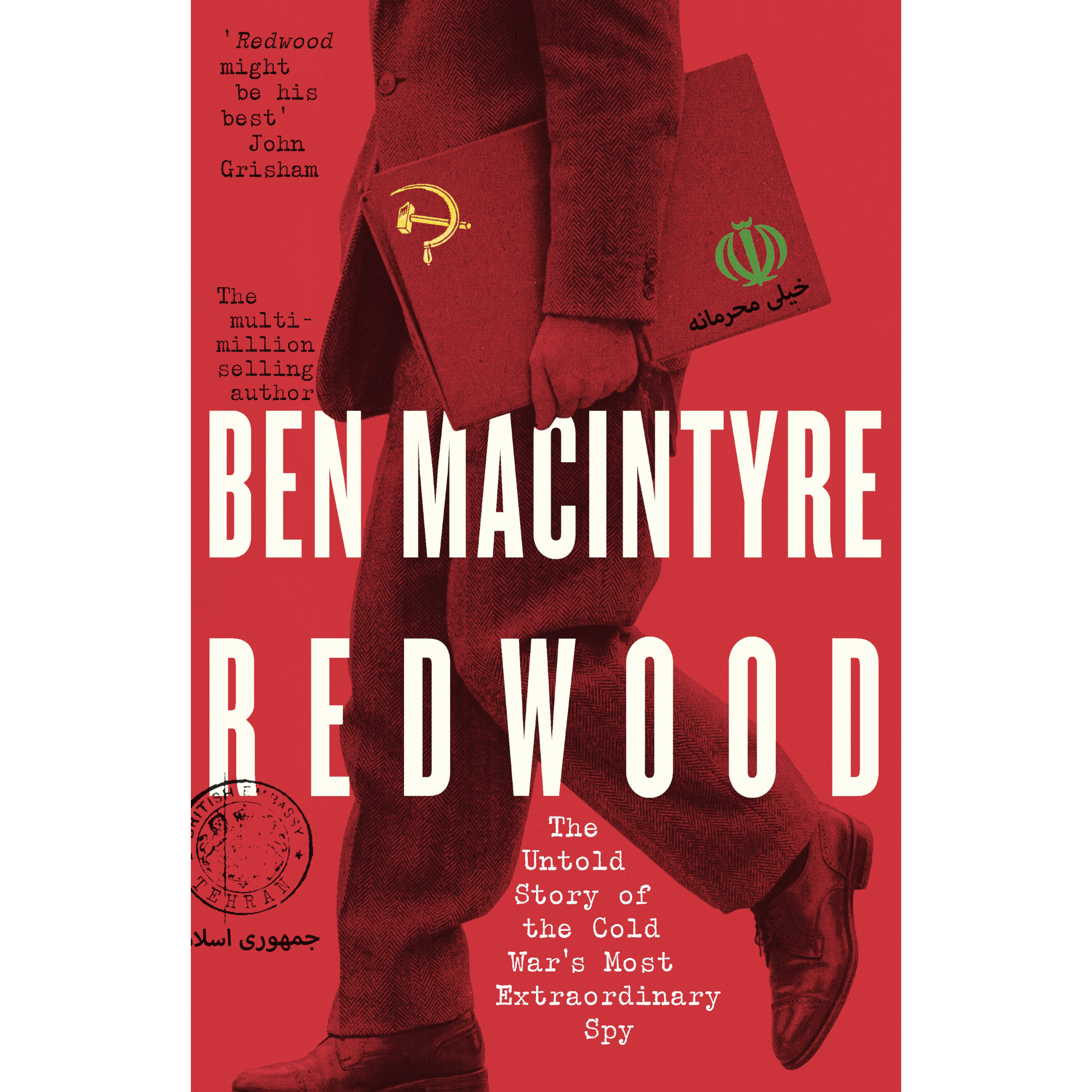
Redwood: The Untold Story of the Cold War's Most Extraordinary Spy | By Ben Macintyre
From the multi-million copy bestselling historian, the remarkable, unknown Cold War story of how one spy saved the world from nuclear war.
The year is 1981. Tehran is in violent turmoil in the wake of the Iranian Revolution. The Soviets are planning to overthrow the Ayatollah’s fledgling Islamist regime. If they do so, one response from America – unknown to the public – would be to use nuclear weapons.
This is the story of how at the height of the Cold War, one mysterious double agent, known to MI6 as ‘Redwood’, revealed the Kremlin’s secret plot and prevented Armageddon. This unsung, hitherto unknown hero of the Cold War, a six-foot-four Russian intelligence officer, had a problem, a sexual secret, one that if revealed, would turn his life upside-down. So he reached out to MI6, believing it to have the only solution – in return for the KGB’s deepest secrets.
And then, facing exposure, he demanded that the British try to smuggle him out of Iran in a high-stakes escape plan. This is the gripping tale of one man’s courage; about friendship, marriage, betrayal and sexual dysfunction; and about how decisions made in secret can have huge, long-term ramifications.
Drawing on never-before-seen material from archives in multiple countries, and interviews with officers from MI6 and MI5, the KGB and CIA, Redwood lifts the lid on how espionage really works, and on an unknown and highly significant Cold War victory. For without Redwood, our world would be very different – and might not exist at all.
More | By Gillian Anderson
‘Am I a bad person? Or am I allowed to wonder “what if”?’.
‘Is this kind of desire simply something people feel but don’t speak about?’.
‘What is a woman without fantasy?’.
More pleasure, more kink, more partners, more zest – this is desire turned all the way up. If Want sparked the fire of a quiet revolution, More gives women the fuel to let it roar.
In this electrifying sequel to the landmark bestseller, Gillian Anderson invites us to leave shame and fear at the door as she dials up the heat on women’s sexual fantasies and dares us to want more. This collection of intimate letters – submitted by anonymous women across the globe, curated and introduced by Gillian – dives deeper into what women everywhere think, feel and dream about in their most private moments. Spilling out of the bedroom, the letters take us to all spaces where desire resides, from office boardrooms to kitchen counters, school gates to forest floors.
Bolder and more explicit, they come from over fifty nations and women from eighteen to eighty. Nothing is off limits: there are silken ropes and stirrups, metal collars and machines, neighbours, friends, in-laws and strangers, cravings to own and be owned, people to desire and be desired by, pleasure and pain in equal measure. Joyful, unapologetic and deliciously unfiltered, More proves that the freedom for women to fantasise without restraint is as exhilarating and vital as ever.
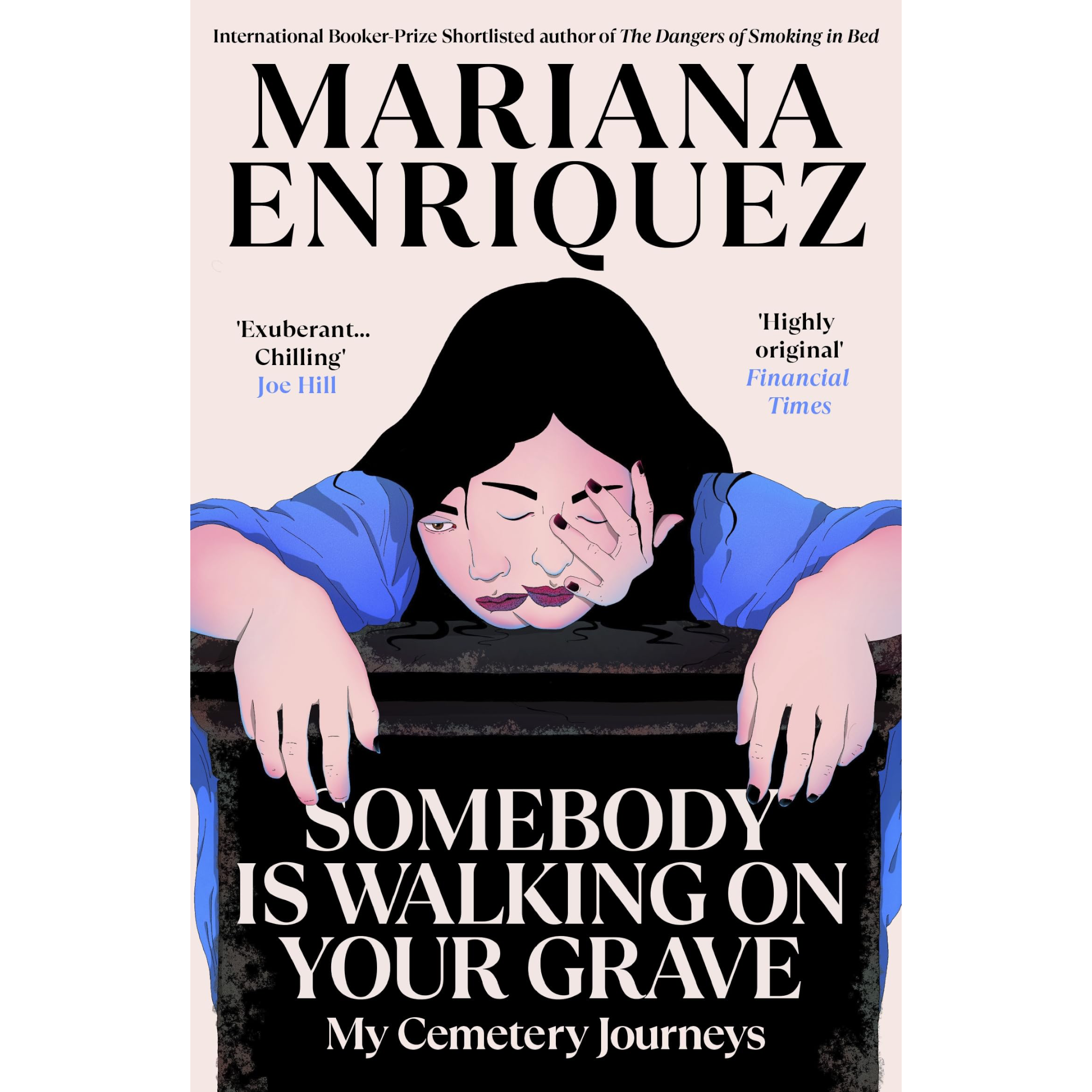
Somebody Is Walking on Your Grave: My Cemetery Journeys | By Mariana Enriquez | Translated by Megan McDowell
In Somebody is Walking on Your Grave, Mariana Enriquez blends journalistic rigour and her fascination with the macabre as we encounter famous graveyards steeped in history, such as Montparnasse in Paris, Highgate in London, and the Jewish cemetery in Prague, as well as more remote, decrepit, hidden, or secretly beautiful ones. These pages are full of the graves of famous figures - Elvis in Memphis, Karl Marx in London - mournful sculptures, traces of voodoo, catacombs, skeletons and an array of legends and stories. Mariana's personal journey weaves through haunting narratives, transforming burial grounds into spaces of reflection, obsession, and emotional discovery between the living and the dead.
From the haunting statues of Staglieno in Genoa to the eerie silence of Rottnest Island's hidden Aboriginal cemetery, Enriquez's narrative shifts effortlessly between travelogue, essay, and memoir. In her unique voice, cemeteries transform into living, breathing places of reflection, obsession and revelation. As she roams, each cemetery becomes a lens through which she examines everything from colonial violence to the strange rituals surrounding death.
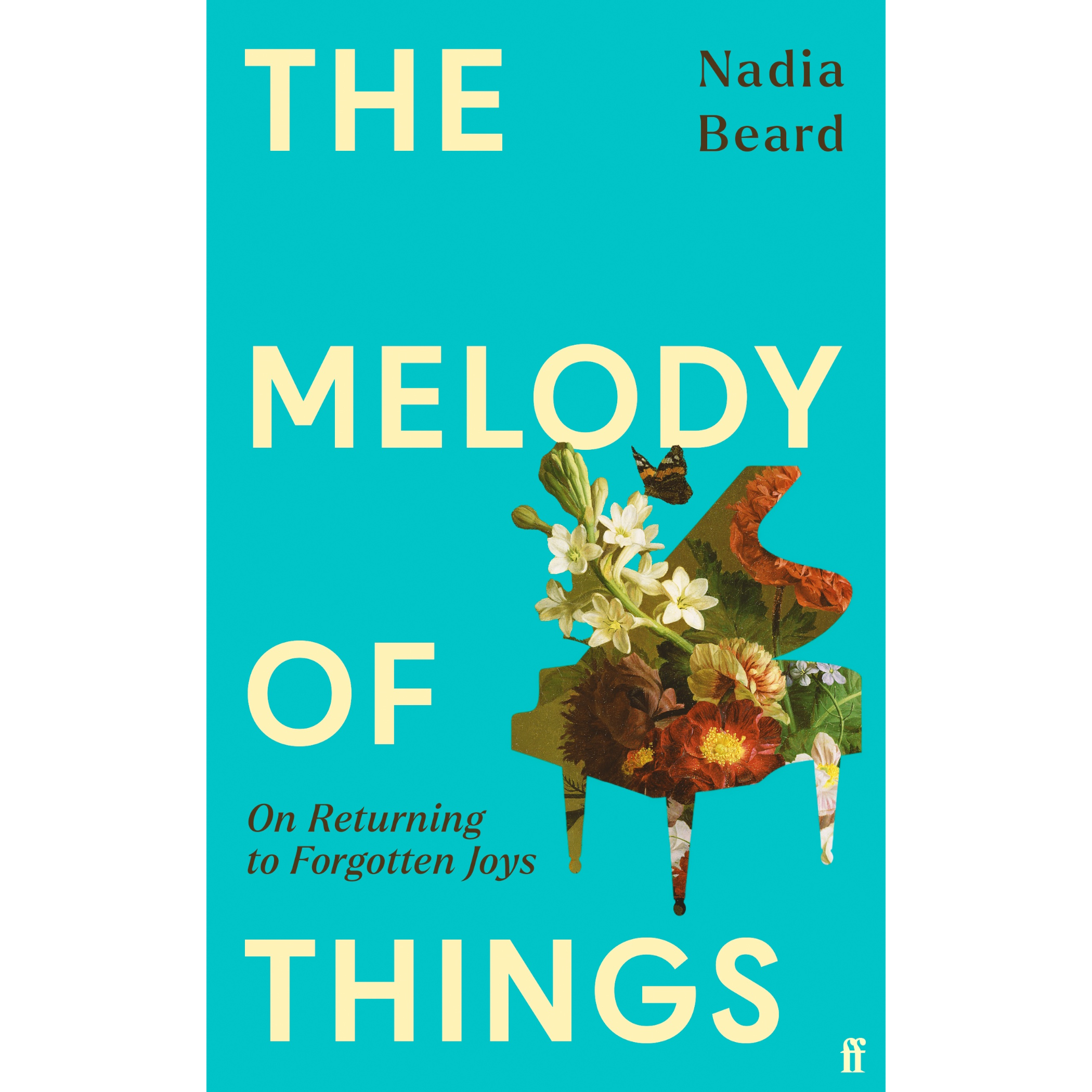
The Melody of Things: On Returning to Forgotten Joys | By Nadia Beard
How do we lose touch with the things we love? And is it possible to find our way back to them?
These pressing questions drive Nadia Beard on a quest to reclaim the dreams of her childhood for her adult self. Many, if not most of us, set aside the pursuits of youth once the reality of working life sets in, leaving the joys and skills of those days far in our slipstream.
The Melody of Things depicts what coming back to those early loves entails, as Beard uproots her life to return to study the piano, years after she had stopped playing as a teenager. Beard explores the pleasures, frustrations and revelations of re-dedicating herself to the instrument as an amateur. Her story is an invitation: to seek out the restorative power waiting to be discovered in the pieces of ourselves we have, perhaps unknowingly, lost to time.
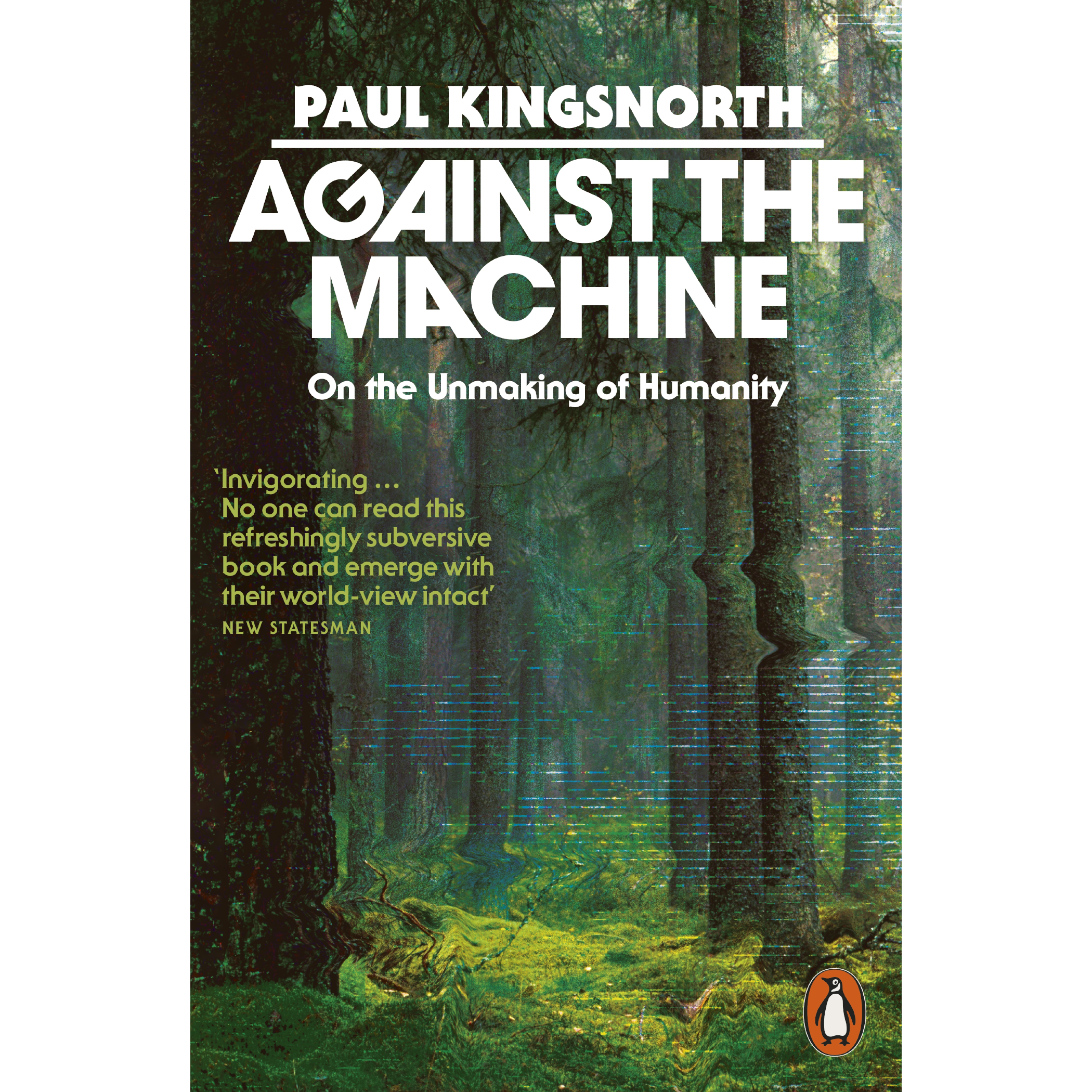
Against the Machine: On the Unmaking of Humanity | By Paul Kingsnorth
How a force that’s hard to name, but which we all feel, is reshaping what it means to be human. In Against the Machine, “furiously gifted” novelist, poet, and essayist Paul Kingsnorth presents a wholly original—and terrifying—account of the technological-cultural matrix enveloping all of us.
With insight into the spiritual and economic roots of techno-capitalism, Kingsnorth reveals how the Machine, in the name of progress, has choked Western civilization, is destroying the Earth itself, and is reshaping us in its image. From the First Industrial Revolution to the rise of artificial intelligence, he shows how the hollowing out of humanity has been a long game—and how your very soul is at stake.
It takes effort to remain truly human in the age of the Machine. Here Kingsnorth reminds us what humanity requires: a healthy suspicion of entrenched power; connection to land, nature and heritage; and a deep attention to matters of the spirit. Prophetic and poetic, Against the Machine is a spiritual manual for dissidents in the technological age.
New & Featured
Non-Fiction
The Green Month | By Matthew Francis
Dafydd ap Gwilym, Wales's greatest poet, explored love, desire and the natural world with startling frankness and virtuoso wit. In a sequence freely adapted from Dafydd's work, Matthew Francis brings him to life for the modern English-speaking reader: as he waits in the woods for his lover, ogles the girls in church or causes chaos during a midnight assignation. Plants, birds and animals are fondly invoked while weather and the elements - wind, waves, fog and ice - play their part.
Passionate in his treatment of sexual themes, Dafydd is equally ready to make fun of his own susceptibility. These delightful poems remain, across the centuries, intimate, urgent and timeless.
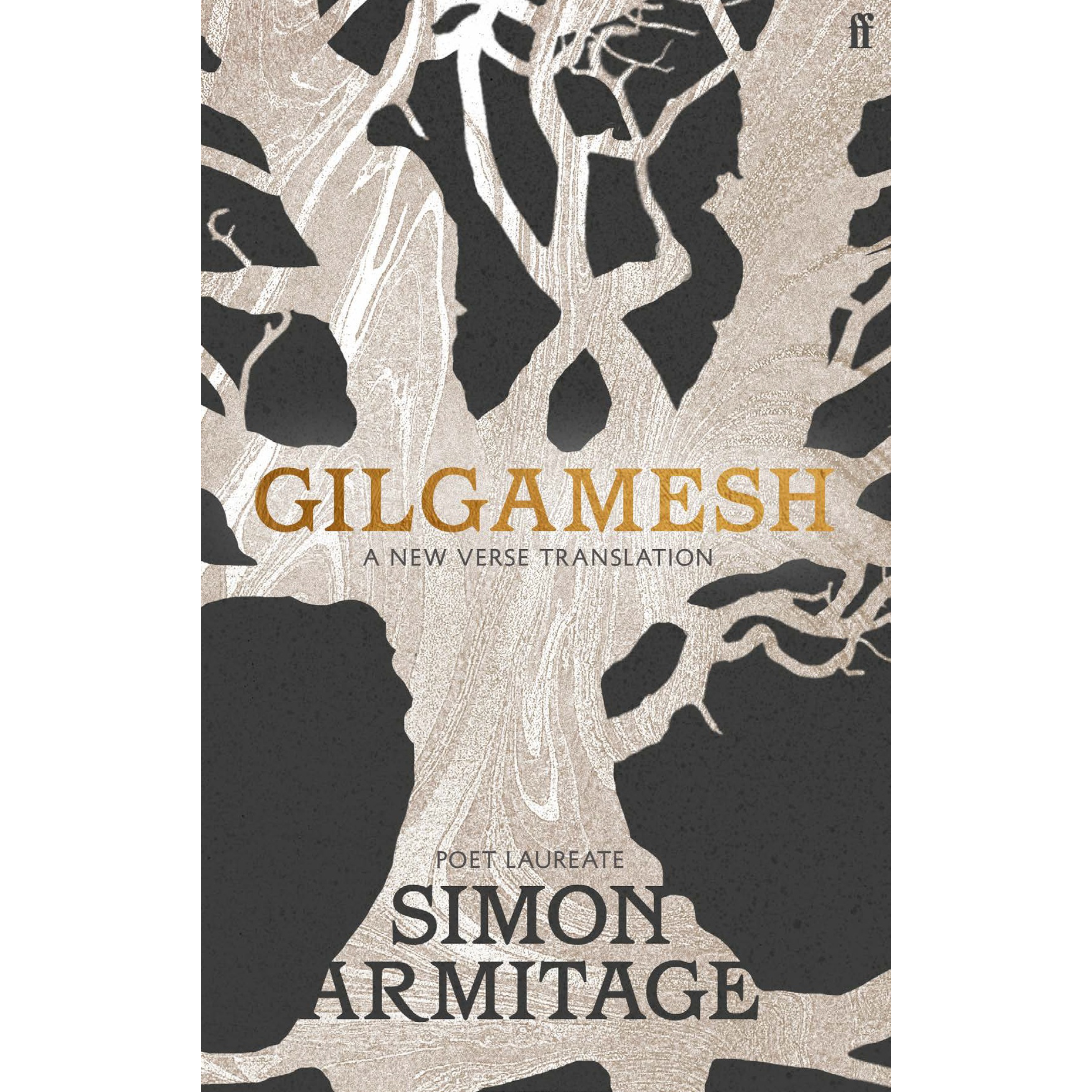
Gilgamesh | By Simon Armitage
Gilgamesh originated in Ancient Mesopotamia nearly 4,000 years ago, yet its themes of power, loyalty, love and loss resound with contemporary relevance. The eponymous demigod tyrannically rules the kingdom of Uruk. To establish peace, the gods create his counterpart, the wild man Enkidu.
The two rivals-turned-comrades embark on a series of extraordinary adventures - note least, battles with Humbaba, ferocious guardian of the Cedar Forest, and the Bull of Heaven. After tragedy strikes, Gilgamesh sets out alone on a desperate quest for immortality that leads him to the very edge of the world…
Simon Armitage's fresh and propulsive version brings Gilgamesh alive as poetry. He harnesses the rhythm of its orchestrated language and conjures a sense of poetic wholeness while honouring its inherent fragmentation.
Enhanced by illuminating commentary, this accomplished translation transports us back to the very origins of civilisation and storytelling.
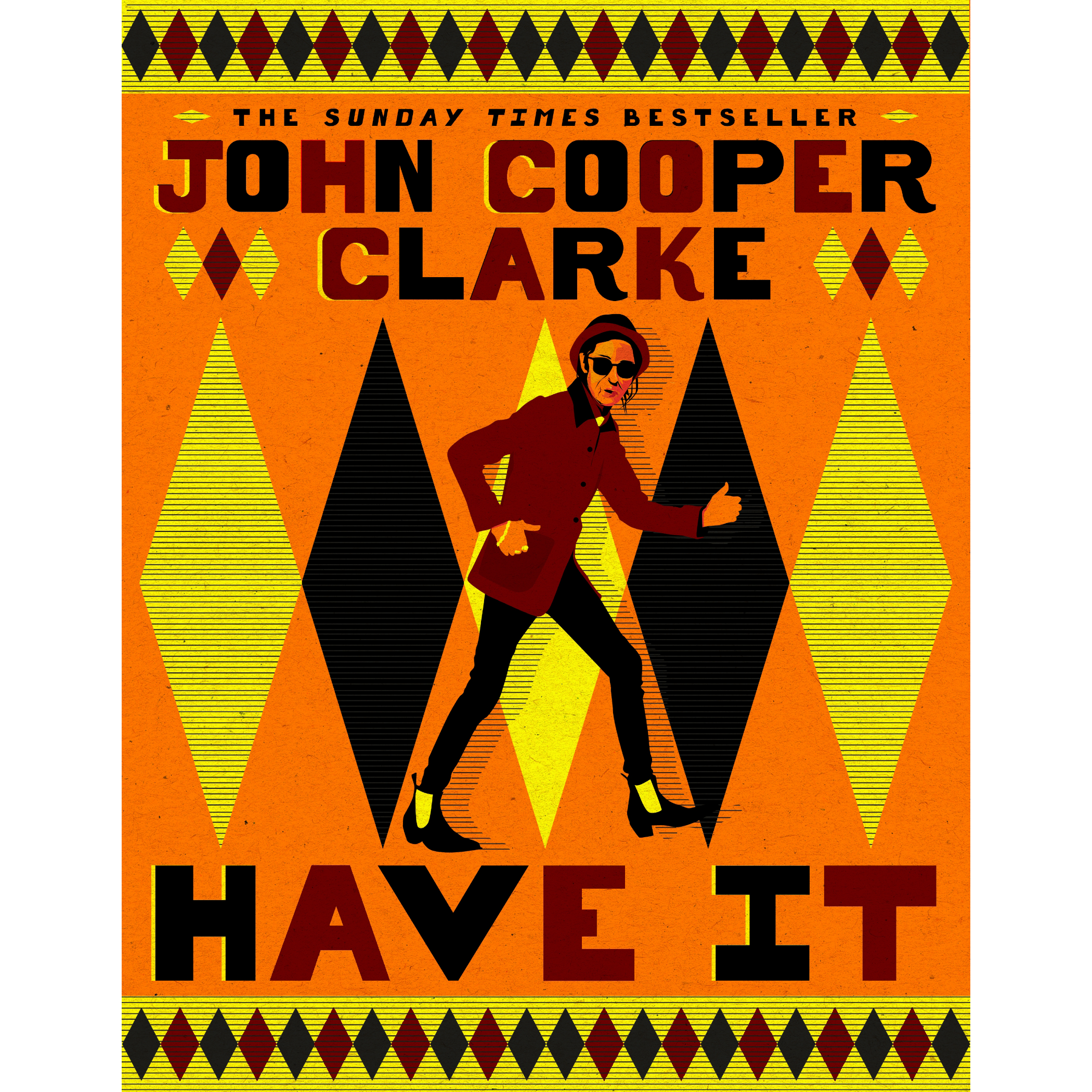
Have It | By John Cooper Clarke
John Cooper Clarke may have an honorary doctorate and a poem on the English Literature GCSE syllabus, but don’t let that fool you: the ‘Poet Laureate of Punk’ is still a bona fide iconoclast.
In Have It, a collection of scathing new poems, the Bard of Salford puts his pen to work across a host of painfully funny critiques of modern life.
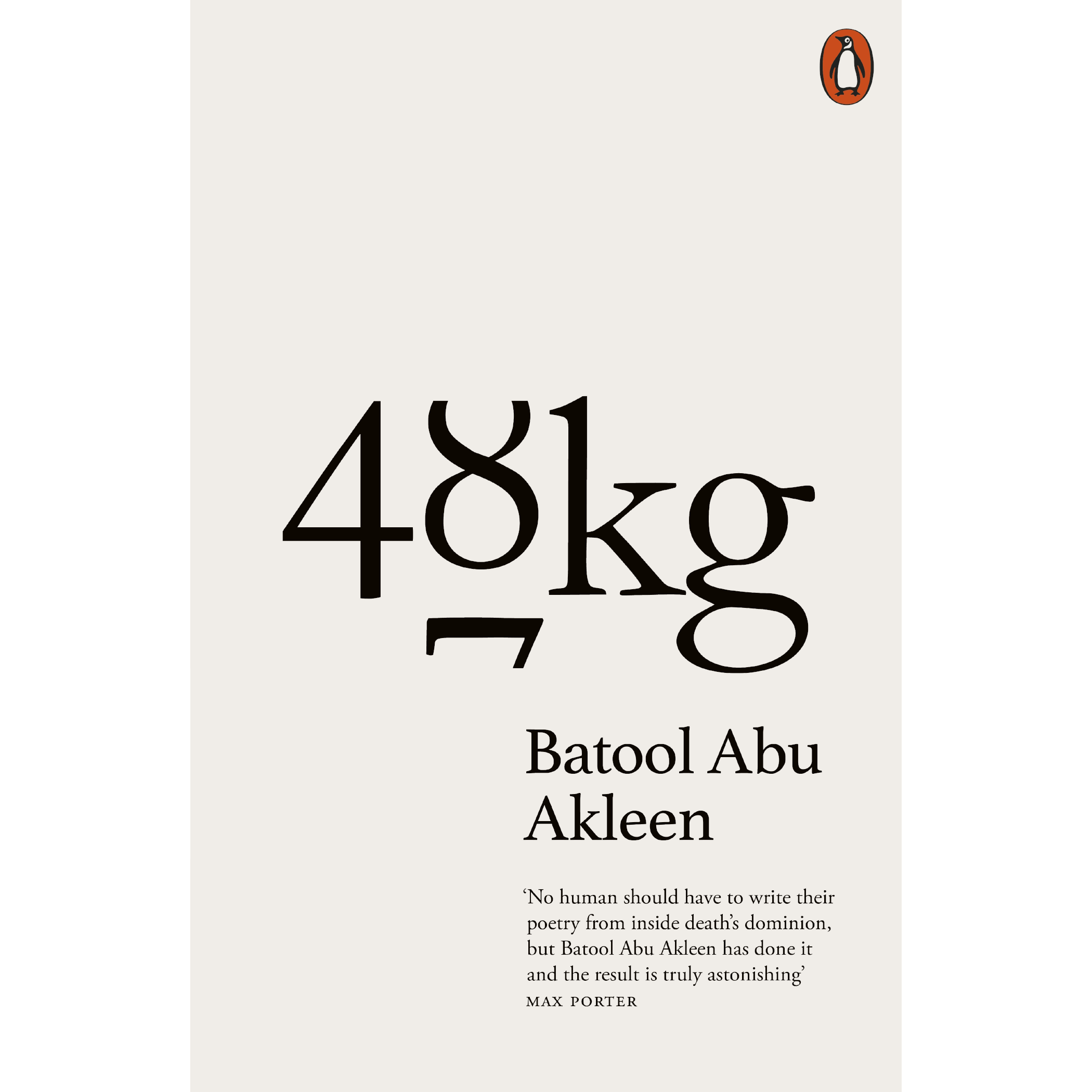
48kg | By Batool Abu Akleen
‘In this book, I am collecting the parts of myself I have found, in case there isn’t anyone there to do so if I am killed.’Each of the forty-eight poems assembled in this startling bilingual collection represents a single kilogram of a body’s mass. In spare, stark language, Abu Akleen writes of a city under siege and a self under constant assault, articulating the personal and the public in the midst of unspeakable violence. 48kg immortalizes her voice and, in doing so, reaches out for a space of shared humanity.
Translated from Arabic by the poet (with Graham Liddell, Wiam El-Tamami, Cristina Viti and Yasmin Zaher), edited by Dominic J. Jaeckle and Cristina Viti, and published in collaboration with Tenement Press.
New Cemetery | By Simon Armitage
The conversion of a local natural-beauty spot into a municipal graveyard is the starting point for New Cemetery. From regular walks around the boundary near his moorland home in West Yorkshire, Simon Armitage chronicles the extraordinary transformation of landscape both outer and inner.
These luminous and wry poems - composed in short-lined tercets - reflect the changing world: one of unstable weather patterns and unpredictable news events, all observed across a few acres of Pennine upland. As seasons come and go and the cemetery fills up with new 'residents', Armitage charts personal losses of his own, often retreating to his garden shed to navigate blank paper with pen and ink. Encompassing lyrical revelations and everyday vignettes alongside apocalyptic visions and imagined conversations with the deceased, these pages draw us into a parallel neighbourhood of remembrance and celebration.
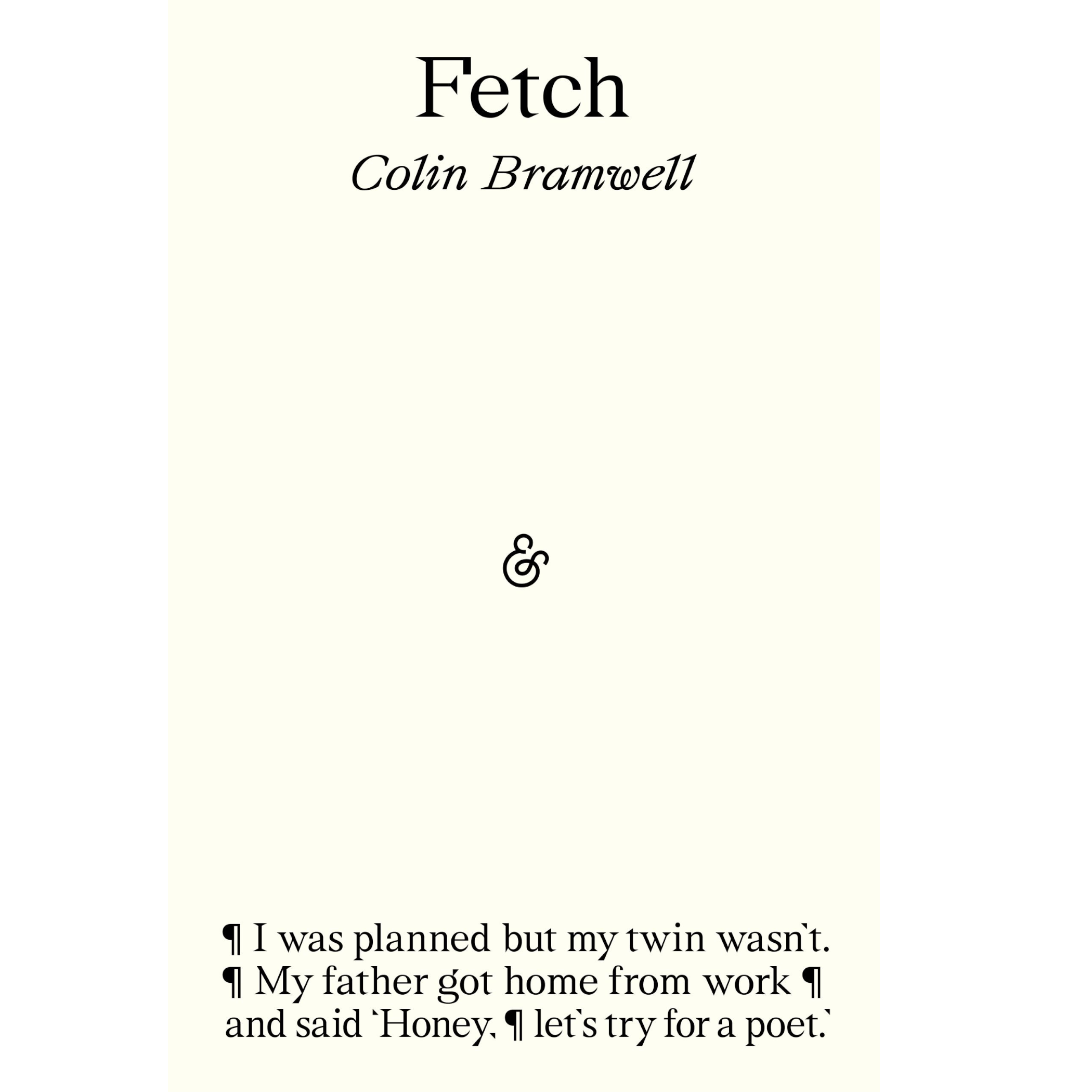
Fetch | By Colin Bramwell
In Celtic folklore a fetch is a shadowy doppelganger that appears from the Otherworld, portending the beholder’s fate. Your fetch ‘fetches’ you to the afterlife, willingly or otherwise. Bramwell’s poetry uses the fetch as a model to explore a number of overlapping binaries - between the reader and the poem, most of all.
Fetch also meditates on the differences between music and speech, the sacred and the profane, the written and the real, humanity and nature, Scots and English. Incorporating multitudes of modes, forms, registers and subjects, Bramwell converses with the Anglo-Celtic lyric tradition in our own time and in his own distinctively amiable fashion. In other words, this poet takes poetry seriously - but not too seriously.
Fetch is an astonishingly musical tour-de-force from one of Britain’s most exciting new poets, in which reverence and irreverence, religion and faithlessness, the living and the dead, nearly rhyme.
On Difficulty (and Poetry) | By Lavinia Greenlaw
A book that uses poetry to talk about difficulty, and vice versa. As Lavinia Greenlaw readily admits, 'The idea of poetry tends to make people feel stupid, anxious or bored.' Poetry can appear to be inherently 'difficult'; our immediate impulse, to baulk or turn away.
But in this wonderfully lucid investigation, Greenlaw invites us to do the opposite: to dwell with her in the uneasiness of difficulty. She looks at why we might both crave and fear difficulty, how we use and perform it, how our relationship to it might expose habits of thought and approach that can be productively dismantled.
By entertaining the possibility of difficulty, she argues, we might allow ourselves to get more truthfully at what it is we really need to say. With characteristic poise and clarity, and using plentiful examples, Greenlaw turns over moments of opacity and resistance to show us how difficulty might in fact contain its own solution.
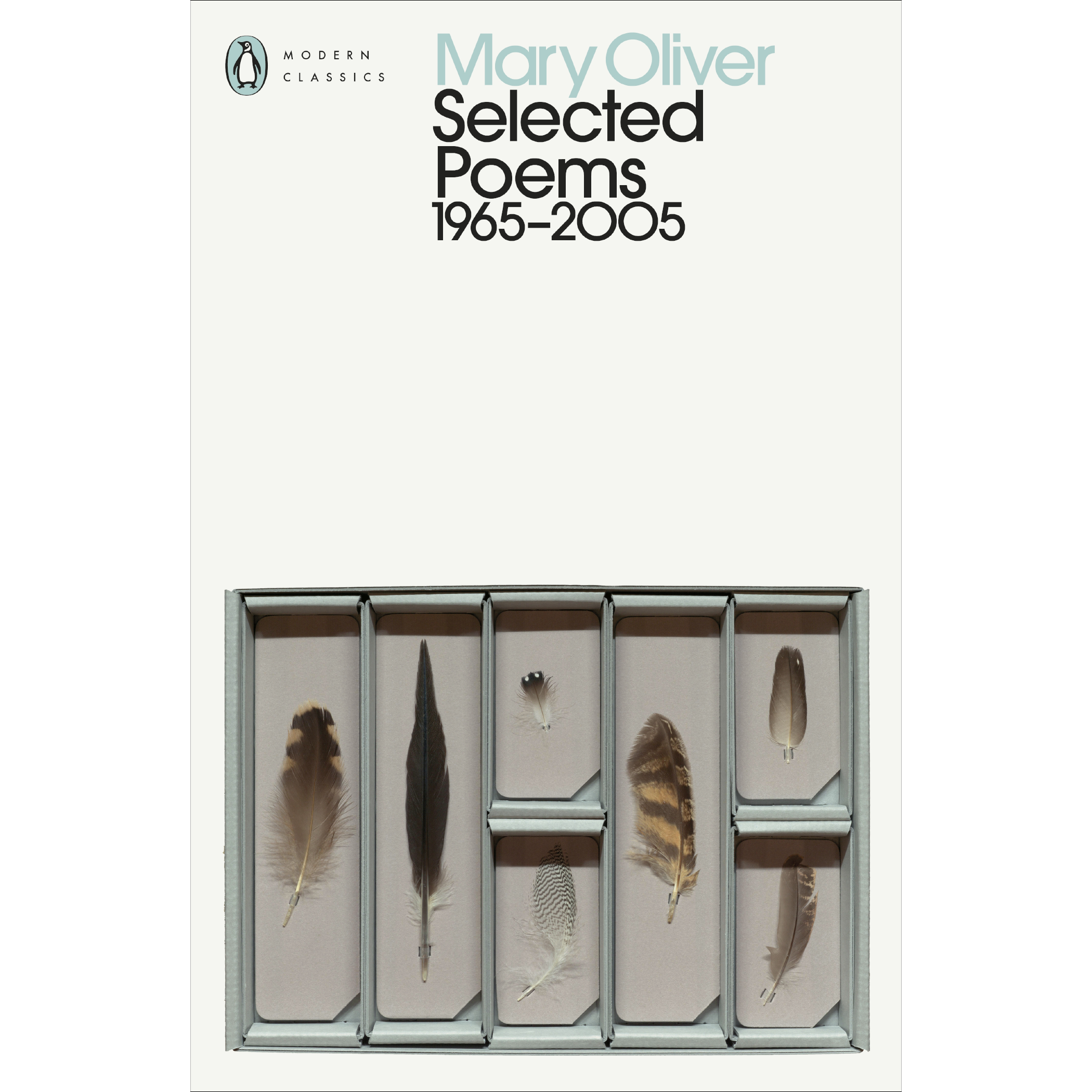
Selected Poems 1965-2005 | By Mary Oliver
I don't know exactly what a prayer is.
I do know how to pay attention, how to fall down
into the grass, how to kneel down in the grass,
how to be idle and blessed, how to stroll through the fields,
which is what I have been doing all day.
Tell me, what else should I have done?
Few modern poets are as beloved or as quoted as Mary Oliver. Spanning the major decades of her long career, this collection showcases Oliver’s remarkable lyrical powers and her reverential attention to the natural world. Her poetry sees life everywhere and asks what to do with it – how can we find our place among such beauty, such pain?
Populated by wading birds, early snowfalls, and swaying cornfields, her reflections are the record of a life spent walking alone in the wild. These timeless poems meet and touch their reader in any season of life, brightened by Oliver’s gift for amazement, shadowed by her constant awareness of harshness and death. Her words teach us to live with our eyes open wider.
New & Featured
Poetry
Lessons for Young Artists | By David Gentleman
We are all artists as children, painting and drawing each day. Most of us stop when we get older – but David Gentleman kept going. For over ninety years he has been drawing, painting, engraving and printing, rising to become one of Britain’s best-known and most loved artists.
His watercolours have filled galleries; his iconic wood cuts are emblazoned across posters, book jackets and train stations; his stamps have made their way to the furthest corners of the world. Here, the great, polymathic artist and craftsman shares what he has learned over the course of a lifetime of making and thinking about art. Unlike his contemporaries, Gentleman was never a teacher; his lessons are a sequence of unconventional prompts and reflections that will deepen how you think about art and the world around you.
Sincere, practical and unpretentious, Gentleman’s insights are a breath of fresh air. Here are new ways to focus, notice the world and cultivate your own style; techniques to evolve your work, from playing with time to painting in bad weather; methods for getting the most out of mistakes and negative criticism; and, above all, reminders to return, always, to the simple delights of creativity.
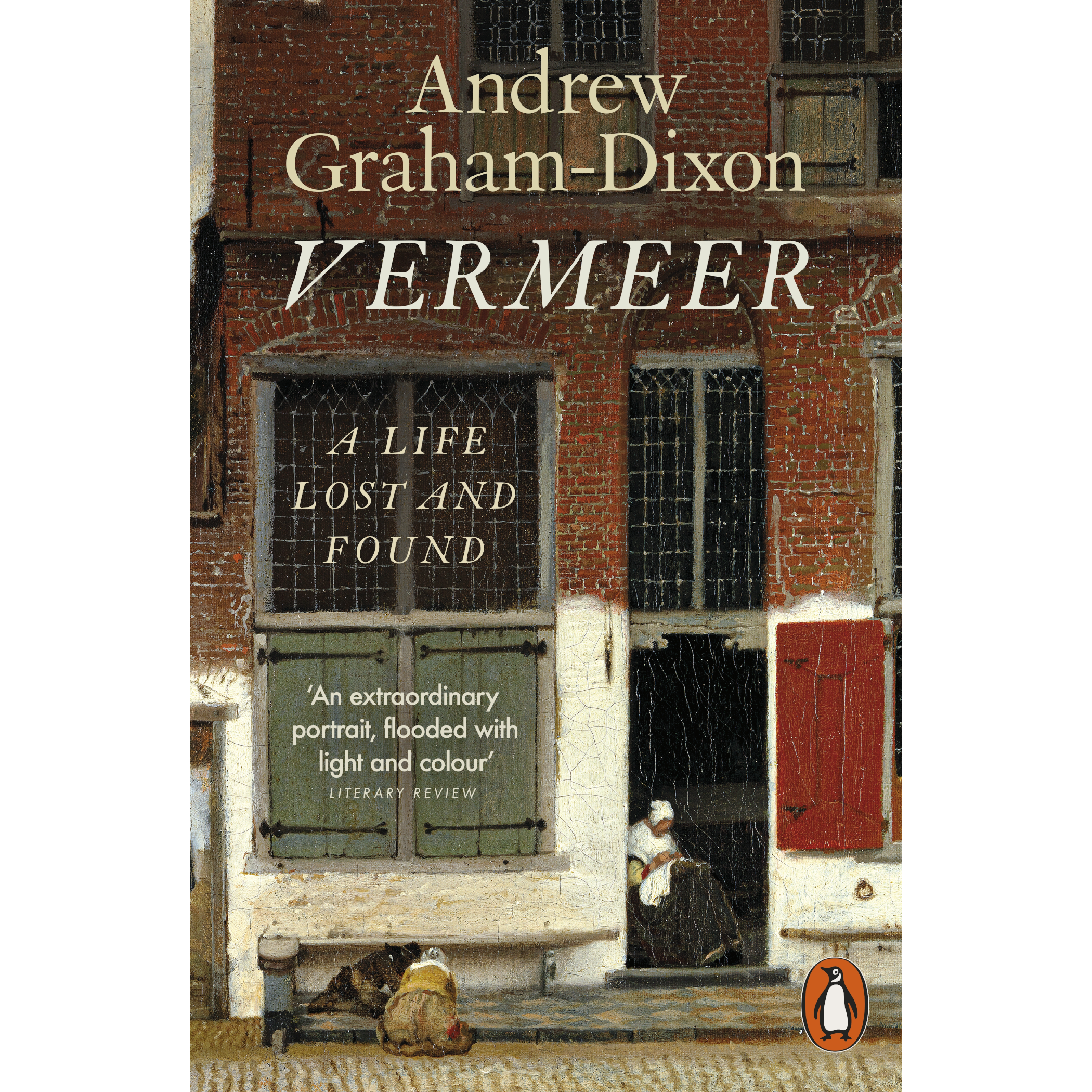
Vermeer: A Life Lost and Found | By Andrew Graham-Dixon
The paintings of Johannes Vermeer of Delft are some of the most beautiful, even sublime, in the history of art. Yet like the life of Vermeer himself, they are mysterious and have for centuries defied explanation. Following new leads, and drawing on a mass of historical evidence, some of it freshly uncovered in the archives of Delft and Rotterdam, Andrew Graham-Dixon paints a dramatically new picture of Vermeer, revealing many of the painter’s hitherto unknown friendships as well as his previously undetected allegiance to a radical movement driven underground by persecution.
He also vividly evokes the world of the Dutch Republic as it was in its so-called Golden Age. This was a watery world of fortresses and flood plains, taverns rocked by argument and cities stunned by devastating attacks and explosions: all linked by a network of canals where a uniquely efficient public transport system, operated by horse-drawn passenger barge, enabled people, goods and ideas to glide effortlessly from one place to another. The author sets Vermeer firmly in the context of his time, revealing the patterns of patronage that make sense of his work, and also exposing the difficulties posed by his home life, which was dominated by his Jesuit mother-in law and disturbed by the psychotic behaviour of her only son.
In the past Vermeer has been imagined as a remote and enigmatic figure, but he emerges from this new account as a man deeply engaged with his own society: well-travelled, a reader of books, a man personally connected to many of the most interesting people of his time, including merchants, philosophers, preachers, bankers and regents, as well as his childhood friend, a philanthropic baker named Hendrick van Buyten. Vermeer was also deeply affected by the struggles that shook his world, the Eighty Years War for Dutch independence and the yet more terrible Thirty Years War, which ravaged the neighbouring German lands and resulted in the deaths of millions. The author shows how he was moved to become a pacifist by such atrocities, and thereafter made many of his closest friends in the ranks of Europe’s first peace movement.
A further revelation is that Vermeer’s closest collaborator and chief patron was a woman, as were many others in his immediate circle. These are all previously untold stories. The many piercingly direct descriptions of Vermeer’s pictures, which are the heart of the book, shed new light on the intentions of the artist.
Nearly all of his best loved works, Graham-Dixon shows, were originally painted for a single significant location in Delft. In light of such discoveries every one of Vermeer’s major paintings, including The Girl with a Pearl Earring, A View of Delft and The Milkmaid, are reassessed and their meanings rethought. As a result the two great unresolved questions about Vermeer – why did he paint his pictures, and what do they mean? – are persuasively answered here for the first time.
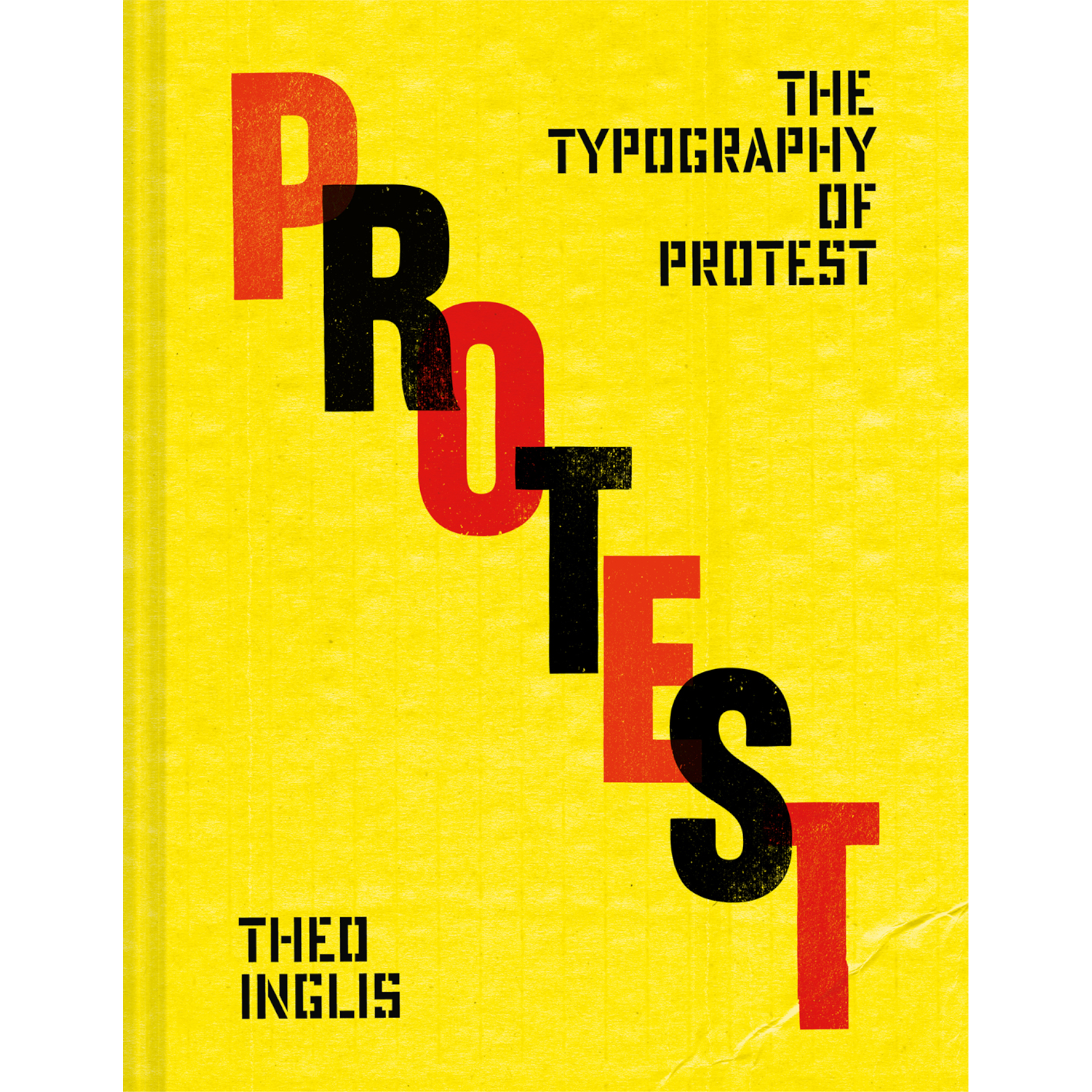
The Typography of Protest: Revolution and rebellion in protest art | By Theo Inglis
A timely, compelling and affecting history of typography being used as a form of rebellion and resistance, lavishly illustrated with full colour reproductions of posters, banners and printed ephemera. Design has long been a means of self-expression, but it is also a fundamental vehicle for change in an increasingly visual world. The Typography of Protest is an illustrated history of how famous designers and determined individuals have used art to dismantle hatred and ignite change. The designers, groups and collectives featured in this book differ in age, race, gender and belief but all are resolute in confronting political and social injustice and inequality through their design and typography.
From the bold feminist collages of Barbara Kruger to Emory Douglas’s defining posters for the Black Panther Party during the Civil Rights era and Keith Haring breaking the silence surrounding AIDS, to Guerrilla Girls exposing racial and sexual inequality in the art world, typography has long been a powerful tool for upsetting the status quo. This thought-provoking book shines a light on the often revolutionary work of artists involved in a diverse range of social and political movements.
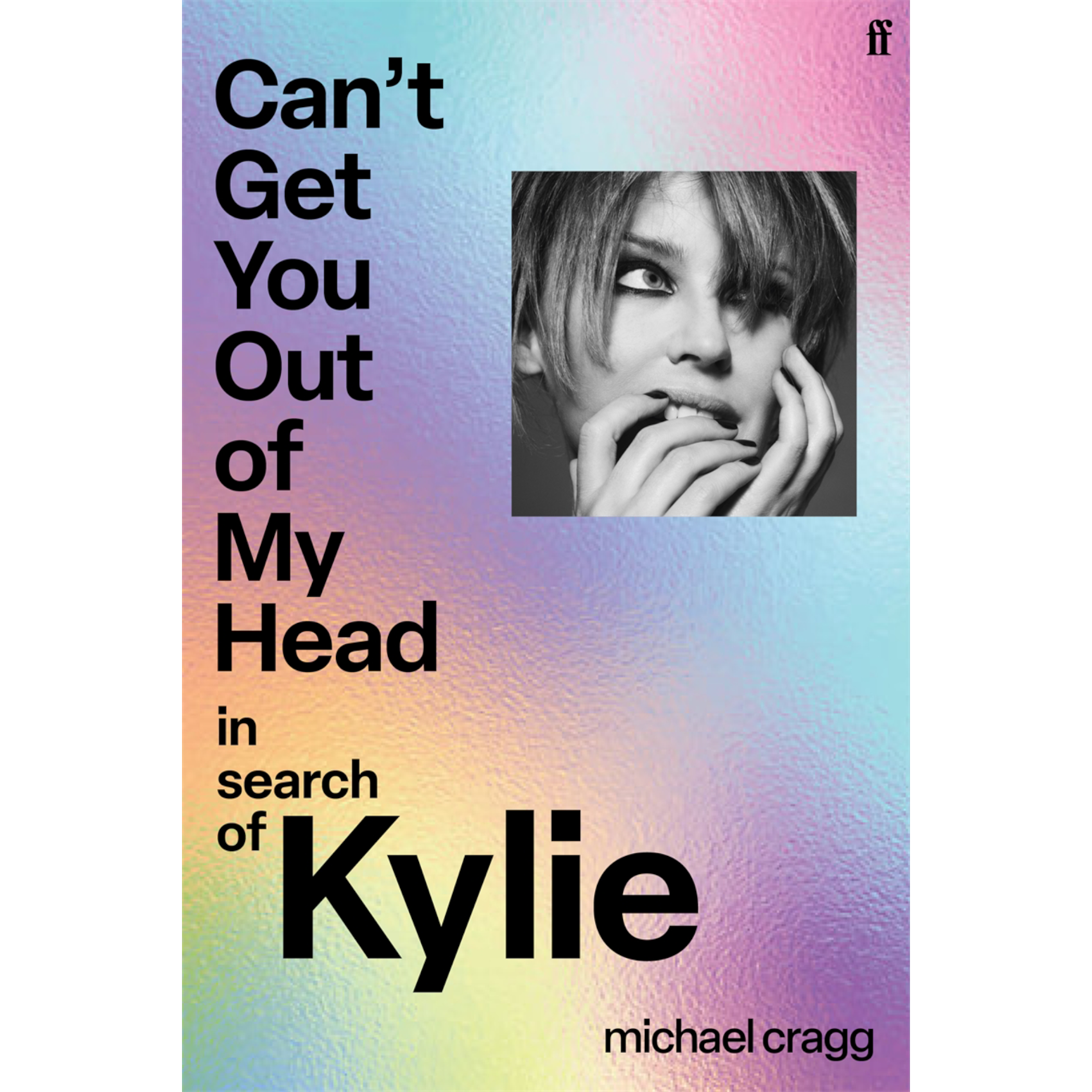
Can't Get You Out of My Head: In Search of Kylie | By Michael Cragg
From her late-eighties beginnings - capturing our hearts as Charlene in Neighbours - to her gold-plated hits like 'Spinning Around' and 'Padam Padam' soundtracking the euphoria of dancefloors the world over, Kylie Minogue is a modern-day icon. But, having sold over eighty-million records internationally and becoming the bestselling Australian pop star of all time, who is the 'real' Kylie? And how has she remained a mystery while also navigating a forty-year career in the fickle world of pop?
Pop-academic and award-winning writer Michael Cragg takes us on a journey into the psyche of one of the world's most enigmatic pop stars. Via a mix of brand new interviews, a dash of oral history and some joyfully irreverent music writing, Can't Get You Out of My Head aims to put the puzzle pieces together.
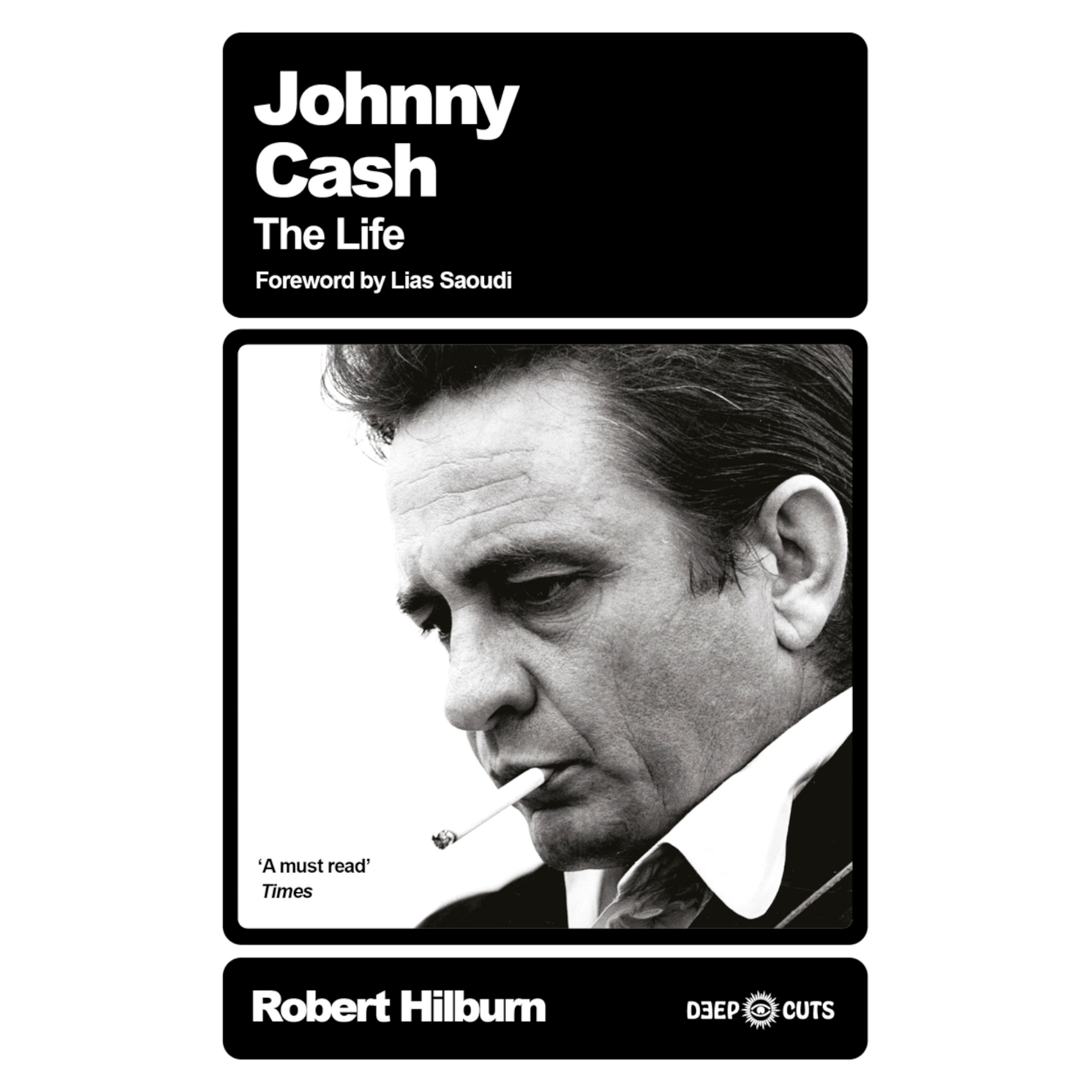
Johnny Cash: The Life | By Robert Hilburn
As the only journalist present at the legendary Folsom Prison concert in 1968, and one of the last to interview Cash and June Carter Cash before their deaths in 2003, Robert Hilburn writes with rare authority and intimacy. Drawing on decades of access and unseen material from Cash's inner circle, he reveals the remarkable highs and devastating lows of a man driven by faith, haunted by addiction and determined to create music that mattered.
The result is a compelling, deeply human portrait of a country icon and rock pioneer whose influence endures. Reissued as part of White Rabbit's Deep Cuts series with a Foreword from Lias Saoudi.
Creative Writing | By David Shrigley
The cultural icon is back: but this time, with no illustrations. Creative Writing is a thoughtfully designed, black and white book of David’s comic writing – pure words, pure joy, pure Shrigley.
Featuring...
Creative Project
The shape of a banana
Whatever you create
it must be the shape of a banana
and look like a banana
That is the only constraint
otherwise you are completely free
to create whatever you want
Let your imagination run wild
and others…
Writing the Real: Essays on Crafting Creative Non-Fiction | By Various | Edited by Dan Coxon and Richard V. Hirst
What does it mean to write about the real world? The creative nonfiction writer faces a daunting task. They must sculpt their experiences into captivating narratives, ensuring that their writing is both accessible and devoid of self-indulgence. They have the memories and the material, but telling their story effectively requires more than simply laying these out on the page.
In Writing the Real, a selection of the best creative nonfiction writers explore the craft in all its forms. From memoir and personal essays to place-based writing and autofiction, writers such as Nikesh Shukla, Kirsty Logan, Kit de Waal and Tom Lee examine how we shape our own experiences on the page, and how the ambiguity of 'reality' can become a source of creative energy. Each writer follows their own path into the real, but taken together these essays show the myriad ways in which lived experience can become a compelling story.
Writing the Real is essential reading for anyone interested in creative nonfiction - whether as a writer, a reader, or someone drawn to the art of making meaning from the world as it is. Featuring essays from: Jenn Ashworth, Marie Crook, Dan Dixon, Kit de Waal, Kristie De Garis, Adam Farrer, Tracy King, Tom Lee, Kirsty Logan, Noreen Masud, Gareth E Rees, Adam Scovell and Nikesh Shukla.
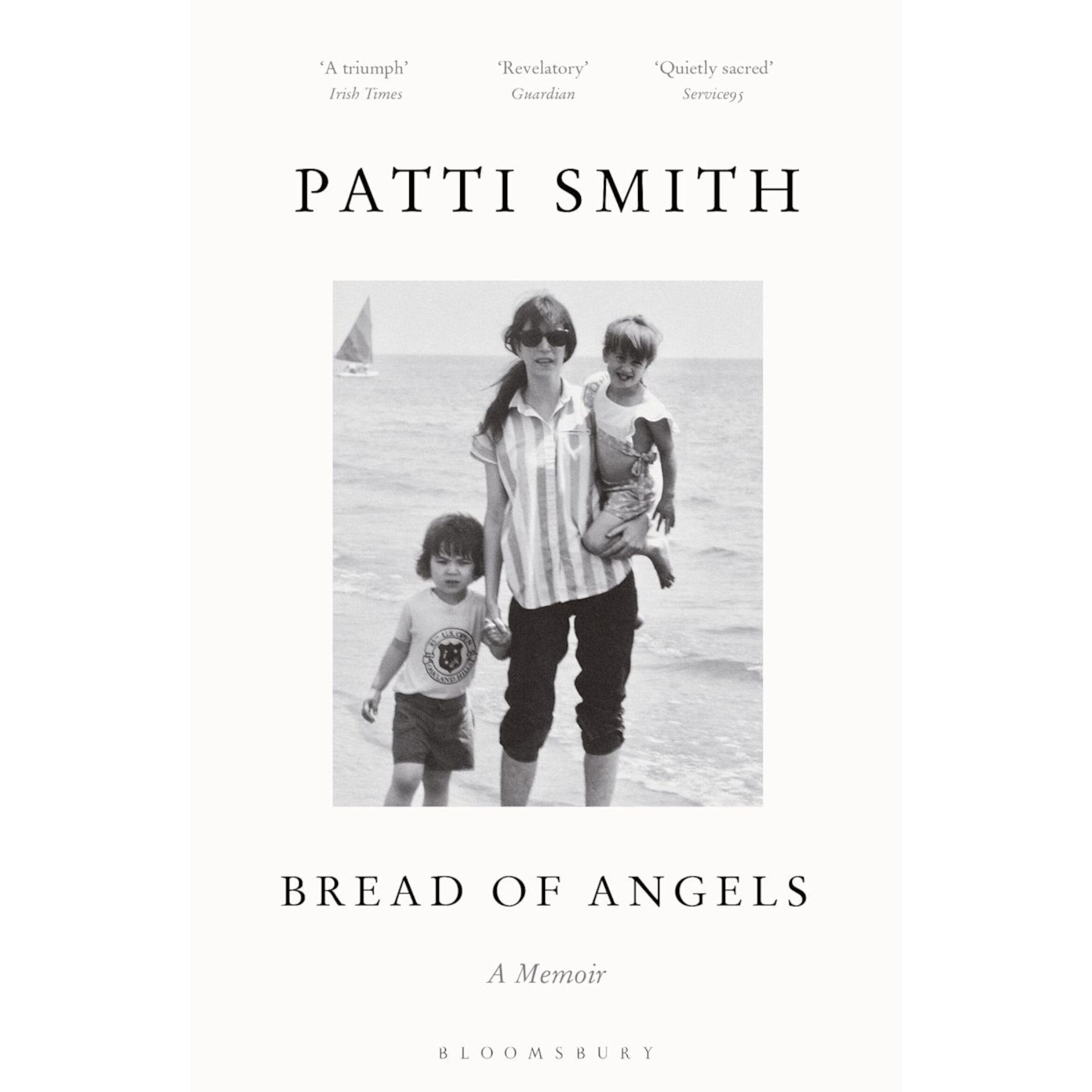
Bread of Angels | By Patti Smith
God whispers through a crease in the wallpaper, writes Patti Smith in this indelible account of her life as an artist. A post-Second World War childhood unfolds in a condemned housing complex described in Dickensian detail: consumptive children, vanishing neighbours, an infested rat house, and a beguiling book of Irish fairytales.
We enter the child’s world of the imagination where Smith, the captain of her loyal and beloved sibling army, vanquishes bullies, communes with the king of tortoises and searches for sacred silver pennies. The most intimate of Smith’s memoirs, Bread of Angels takes us through her teenage years where the first glimmers of art and romance take hold. Arthur Rimbaud and Bob Dylan emerge as creative heroes and role models as Patti starts to write poetry, then lyrics, merging both into the iconic songs and recordings such as Horses and Easter, ‘Dancing Barefoot’ and ‘Because the Night’.
She leaves it all behind to marry her one true love, Fred Sonic Smith, with whom she creates a life of devotion and adventure on a canal in St. Clair Shores, Michigan with ancient willows and fulsome pear trees. She builds a room of her own, furnished with a pillow of Moroccan silk, a Persian cup, inkwell and fountain pen.
The couple spend nights in their landlocked Chris-Craft studying nautical maps and charting new adventures as they start their family. As Smith suffers profound losses, grief and gratitude are braided through years of caring for her children, rebuilding her life and, finally, writing again — the one constant in a life driven by artistic freedom and the power of the imagination to transform the mundane into the beautiful, the commonplace into the magical, and pain into hope. In the final pages, we meet Patti on the road again, the vagabond who travels to commune with herself, who lives to write and writes to live.
New & Featured
Art, Photography & Music
The Little Book with No Pictures | By B.J. Novak
A silly, chunky board book for babies and toddlers from the mega-bestselling author and comic writer, B.J. Novak.
What might the words in this book with no pictures make the reader say?
Maybe: "BONK my nose!" or "MOO like a cow!" or "Eat the book—yum yum yum!"
It might even include some actions, like bouncing and hugging and dancing. Wait—WHAT?!
The Little Book with No Pictures is filled with new content and so much silly fun, perfect for babies, toddlers and grownups alike.
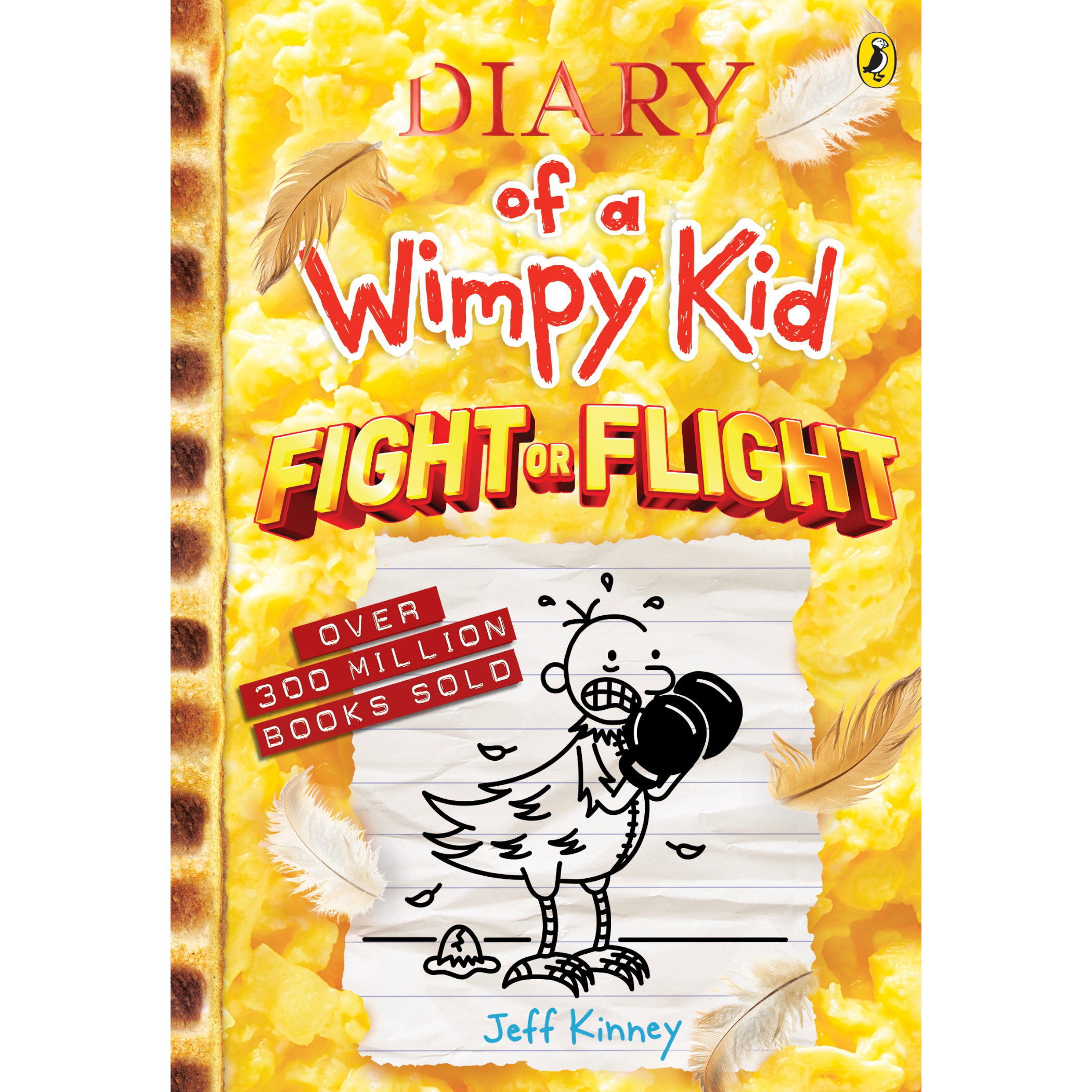
Diary of a Wimpy Kid: Fight or Flight | By Jeff Kinney
When the going gets tough, what's a wimpy kid to do?
Nobody knows how to survive the rough and tumble halls of middle school better than Greg Heffley. In fact, he's got a three-ring binder chock-full of notes on his school's biggest bullies—along with his hard-earned strategies for how to outsmart them. But when Greg's binder falls into the wrong hands, his world starts to unravel.
Now it's a race against time before the bullies discover the identity of the person behind it. Greg has learned to roll with the punches, but now he's backed into a corner with no good options. Will he throw in the towel, or go down swinging? One thing's for sure—Fight or Flight is a knockout!
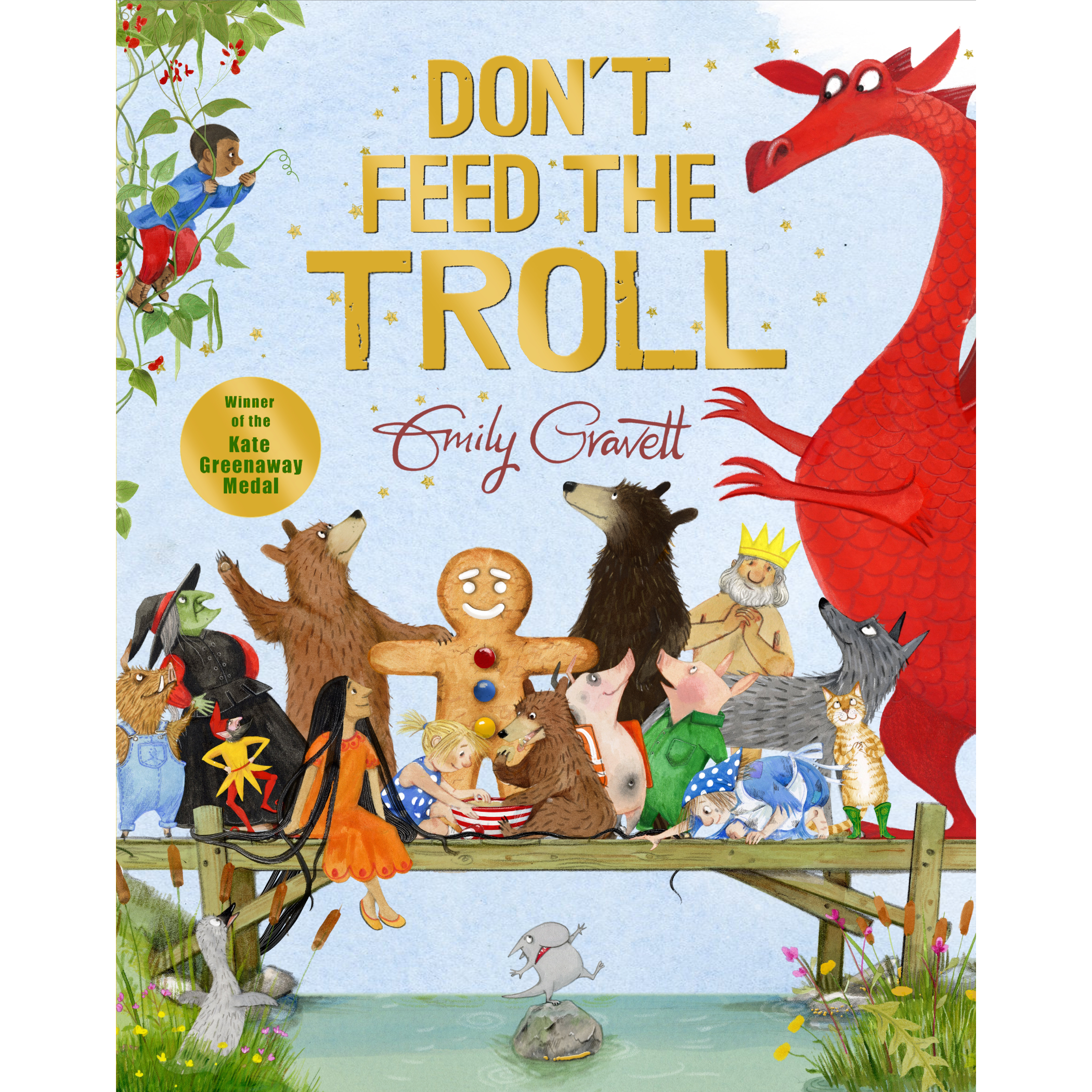
Don't Feed the Troll | By Emily Gravett
Everybody in faraway fairytale land is getting ready for a very special party. Except one tiny bridge troll, who is making his own fun – by being extremely rude. With every insult he hurls, with every ego he bruises, he gets bigger and bigger.
How will Cinderella, the three little pigs and all the other fairytale friends defeat that pesky troll?
This big, beautiful picture book includes a jacket with sparkly gold foil, making it the perfect gift for the little ones in your life.
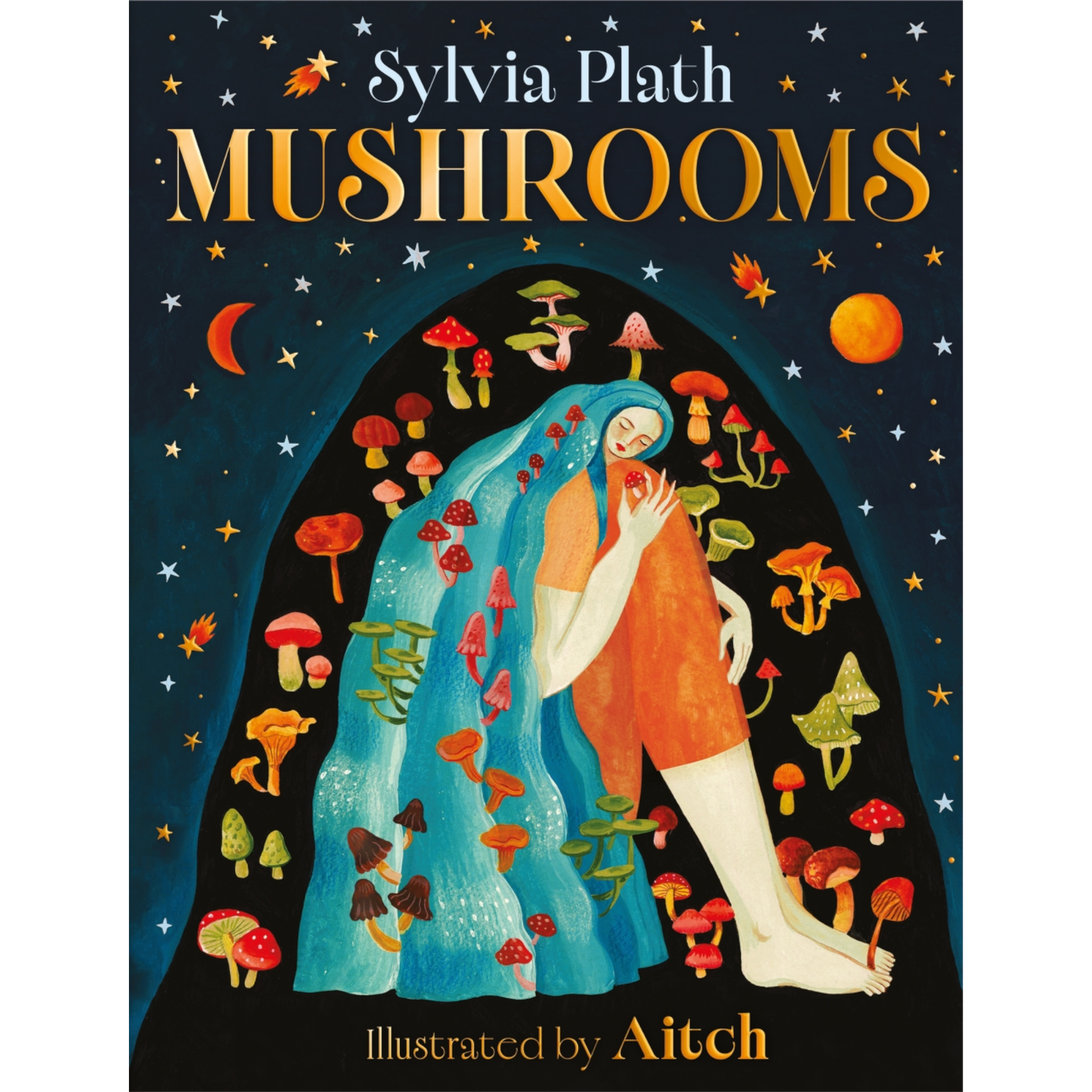
Mushrooms | By Sylvia Plath | Illustrated by Aitch
Nudgers and shovers
In spite of ourselves.
Our kind multiplies
We shall by morning Inherit the earth...
Delve deep into the undergrowth and explore the underfoot world of mushrooms through the breathtaking words of Pulitzer Prize winner, Sylvia Plath. Discover their many colours and hues, their ability to break through any terrain and their determination to not be ignored.
In her eyes, it is a world rooted in nature, resilience and womanhood. With stunning illustrations from artist Aitch, this is a sumptuous book to be adored and treasured. The perfect gift for lovers of poetry, nature and those who find beauty in the overlooked.
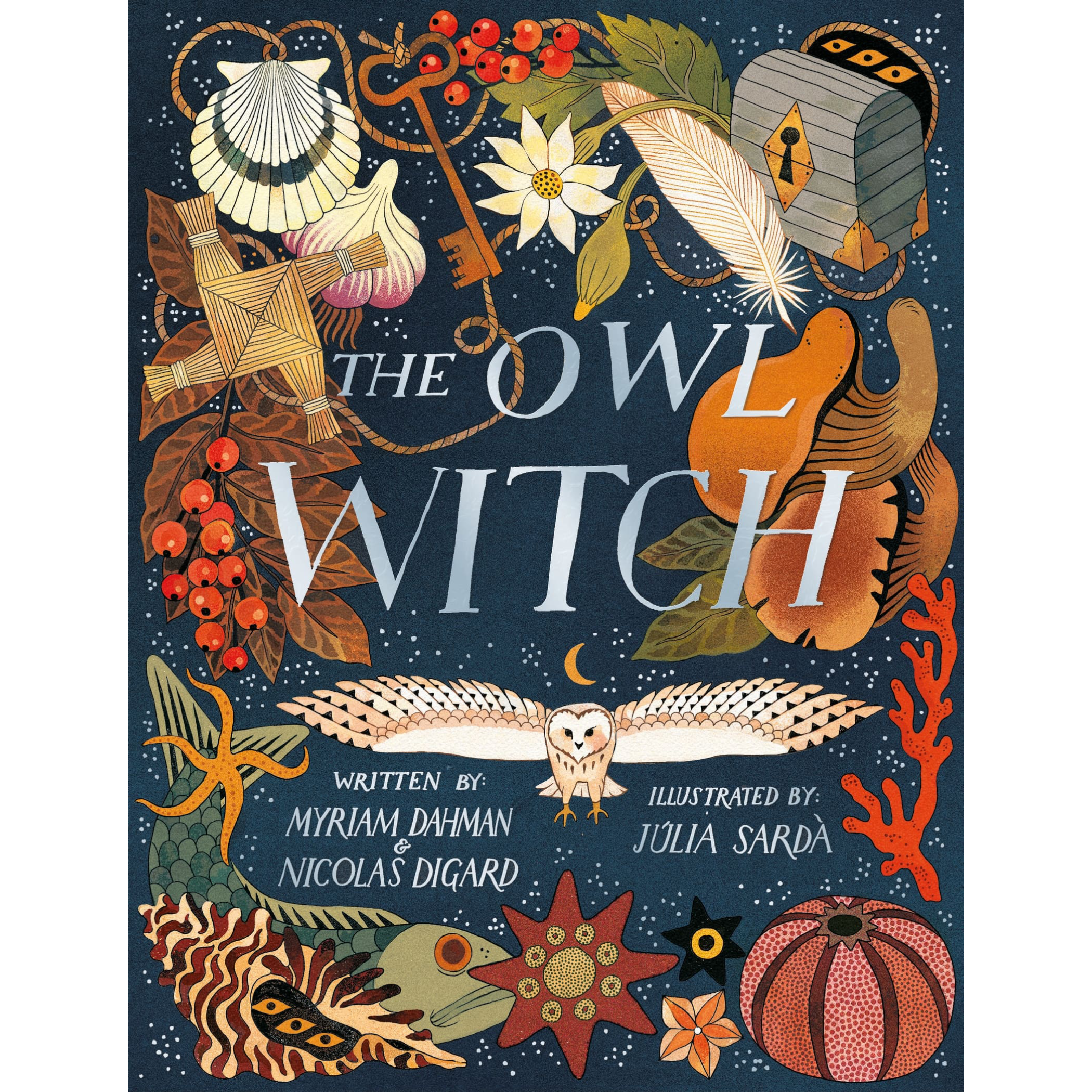
The Owl Witch | By Myriam Dahman and Nicolas Digard | Illustrated By Julia Sarda Portabella
In a solitary house on a secluded island lives a woman known as the Owl Witch who longs for companionship. One evening, a traveller called Noor arrives with a mysterious invitation from her master, Blackink Baldassare, a devilish force who rules the depths of the sea. Can the Owl Witch outsmart the wily Blackink and help Noor to regain her freedom?
A richly atmospheric gift of a book about courage and empowerment, from the award-winning creators of The Wolf's Secret and Leina and the Lord of the Toadstools, illustrated by the internationally acclaimed artist Júlia Sardà.
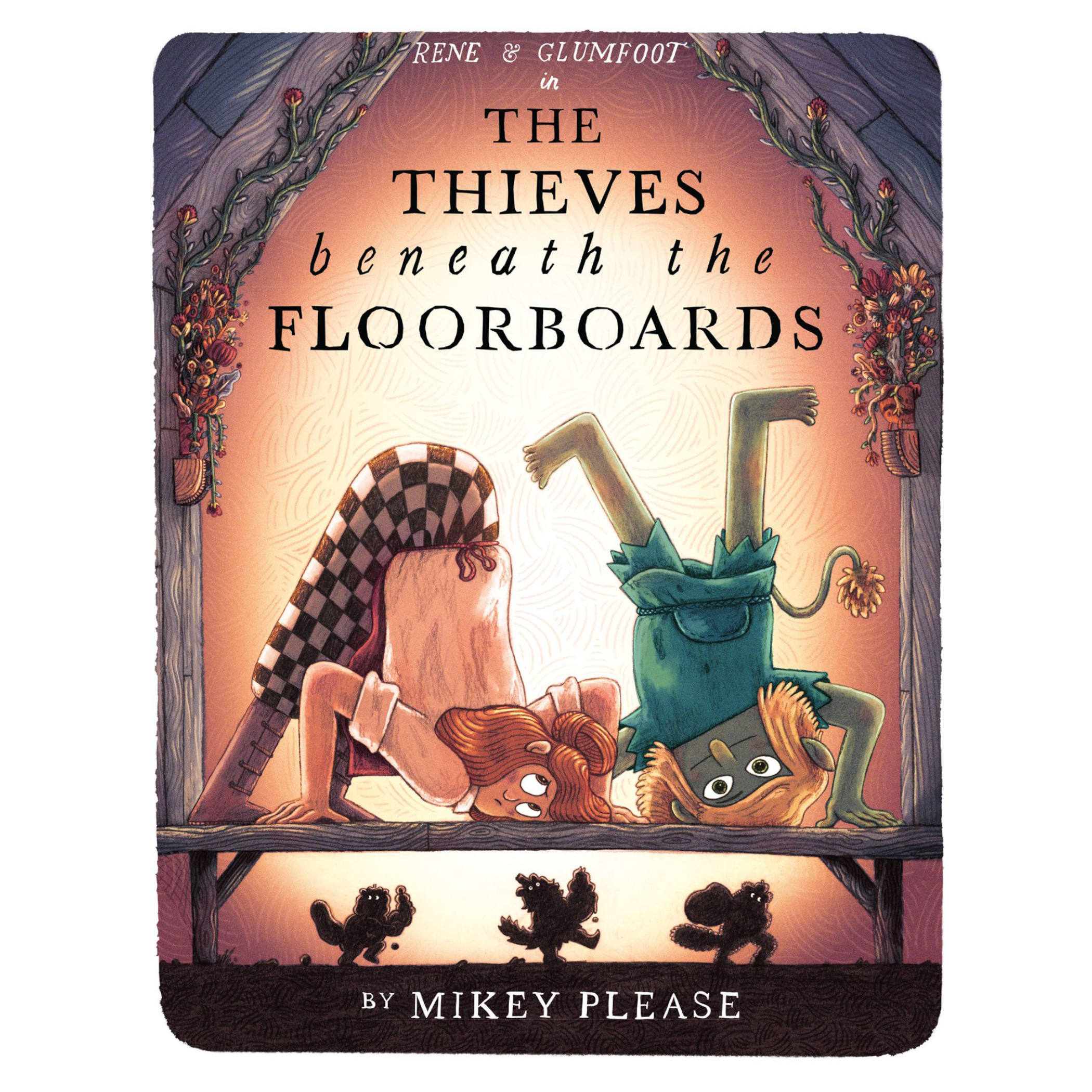
The Thieves Beneath the Floorboards | By Mikey Please
Join Rene and Glumfoot at the Café at the Edge of the Woods – this time with some unexpected visitors beneath the floorboards … When Rene hears gnawing, clawing and scratching sounds from underneath the café, she just can't ignore them. Using every skill she can muster, she lays an elaborate trap – but what she finds will put all of her hopes and dreams in jeopardy … Full of Mikey's unparalleled world-building and imaginative storytelling, rejoin Rene and Glumfoot once again for more folklore figures, culinary escapades and entirely unexpected guests.
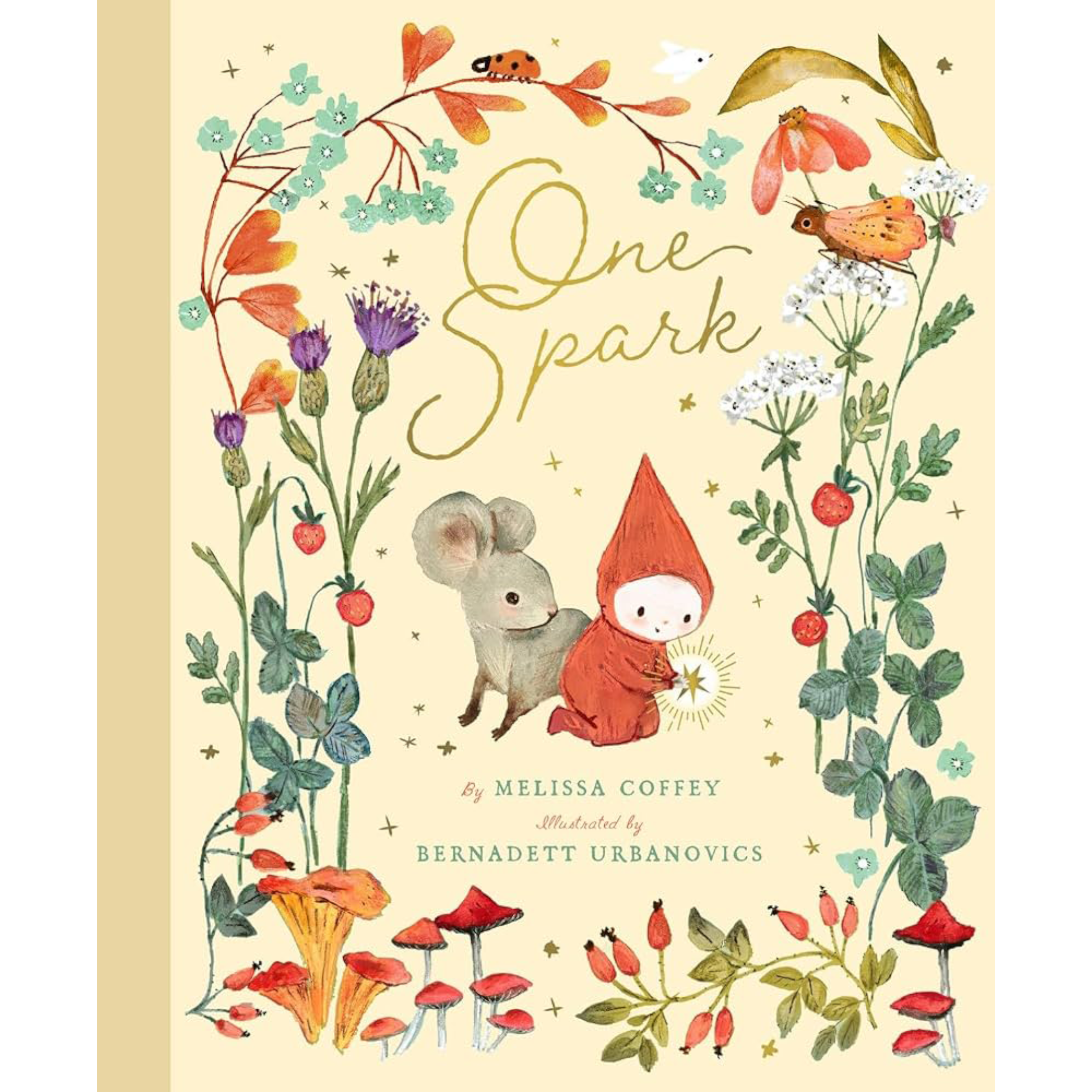
One Spark | By Melissa Coffey | Illustrated by Bernadett Urbanovics
Inside every child lives a spark.
It may begin as a quiet flicker, yet it holds something powerful: imagination, kindness, courage, and the ability to make the world brighter. In One Spark, lyrical language and gentle rhythms guide readers through the discovery of that inner light. Along the way, children learn that the spark within them grows through curiosity, compassion, and connection with others. Thoughtful, soothing, and visually rich, this inspiring picture book offers families a meaningful way to talk about emotions, self-belief, and the ways small acts of care ripple outward into the world. A heartfelt gift for children, parents, teachers, and anyone who believes a little light can go a long way.
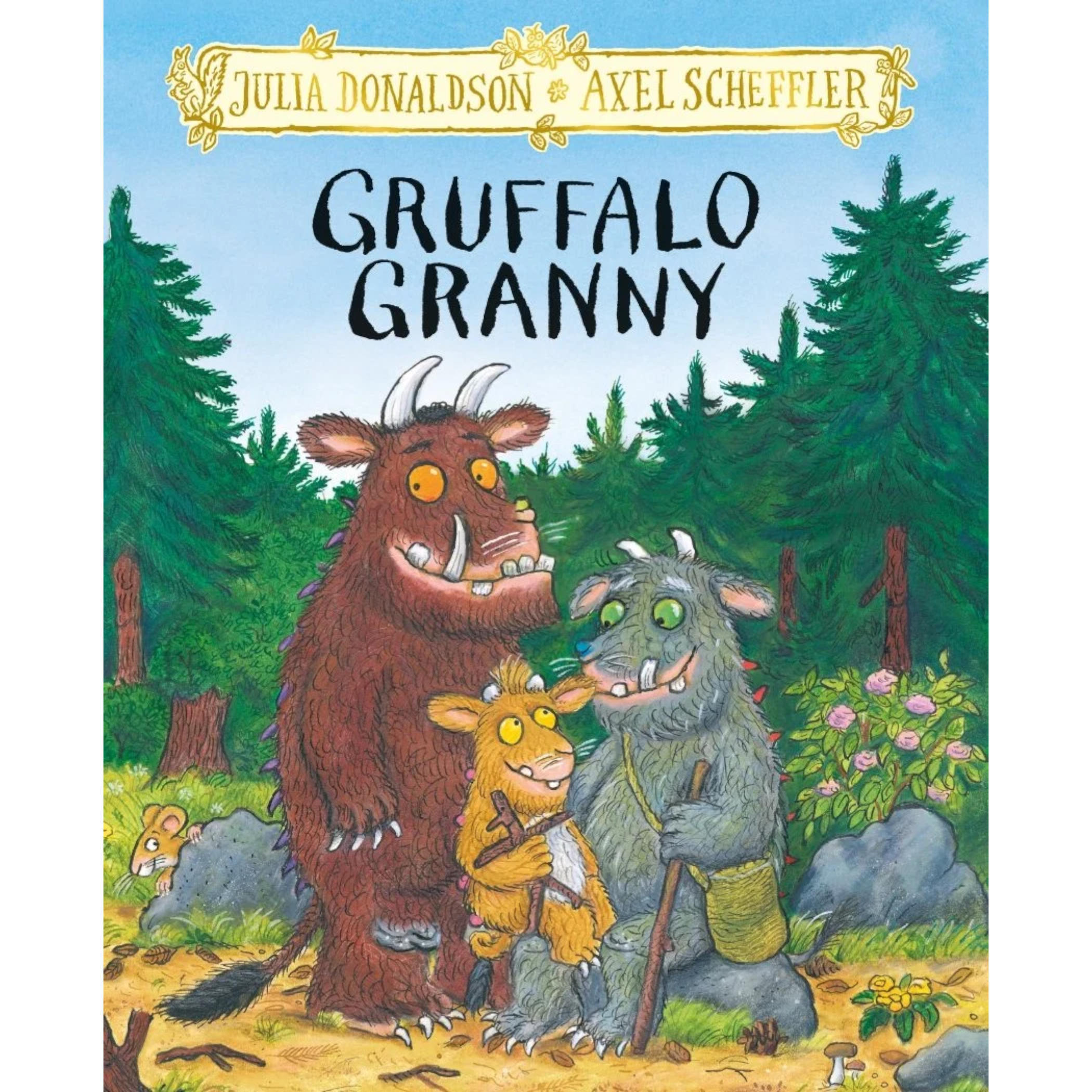
Gruffalo Granny | By Julia Donaldson | Illustrated by Axel Scheffler
The Gruffalo said to his daughter one day, “Your Gruffalo Granny is coming to stay.” Return to the deep dark wood with the first new Gruffalo story in over 20 years, and meet Gruffalo Granny as she visits the Gruffalo family. This fresh and exciting new Gruffalo adventure features the return of much-loved characters and is destined to become a classic.
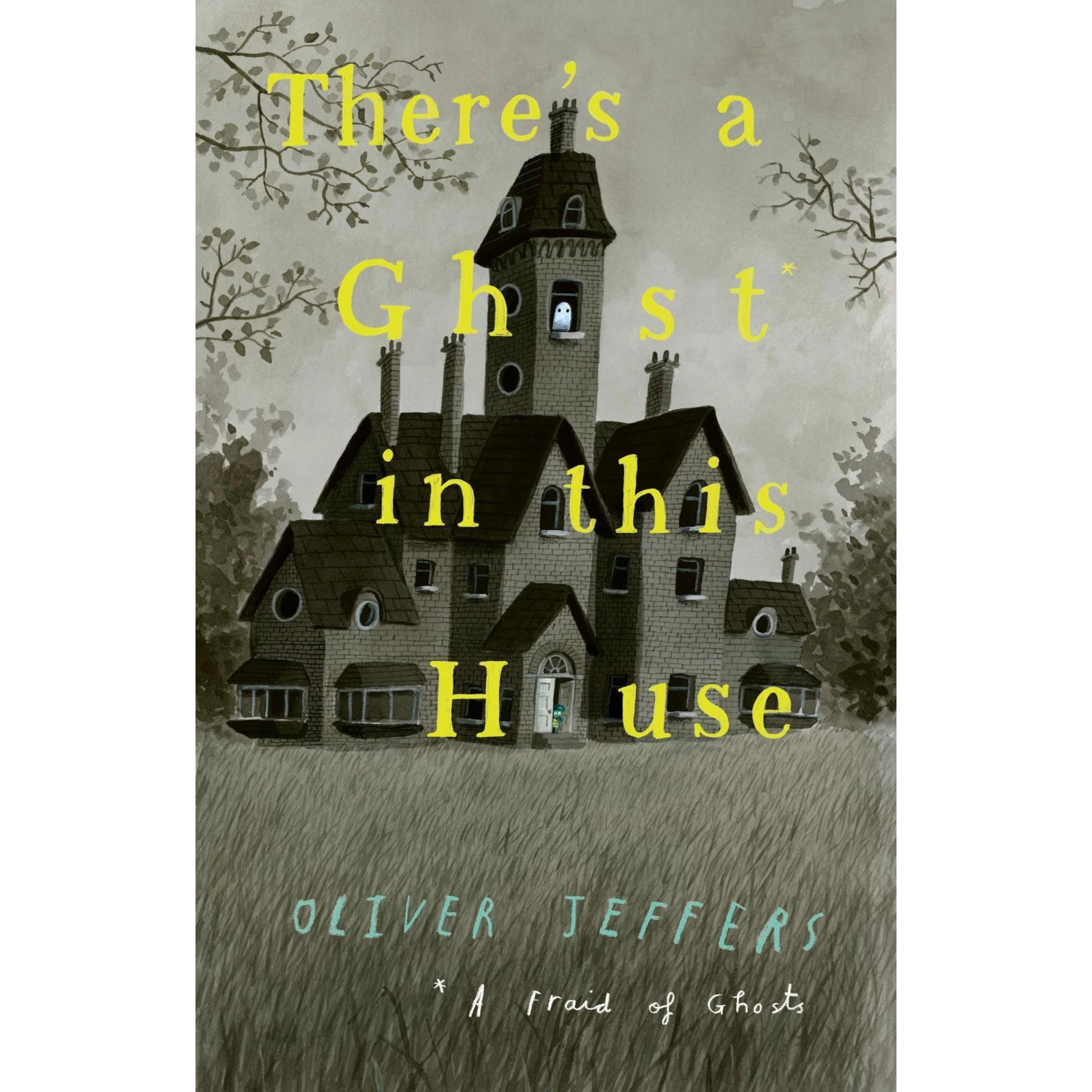
There’s a Ghost in this House | By Oliver Jeffers
'Hello, come in. Maybe you can help me?'
A young girl lives in a haunted house, but has never seen a ghost.
Are they white with holes for eyes? Are they hard to see? She’d love to know! Step inside and join in an entertaining ghost hunt, from behind the sofa, right up to the attic. With lots of friendly ghost surprises and incredible mixed media illustrations, this unique and funny book will entertain young readers over and over again!
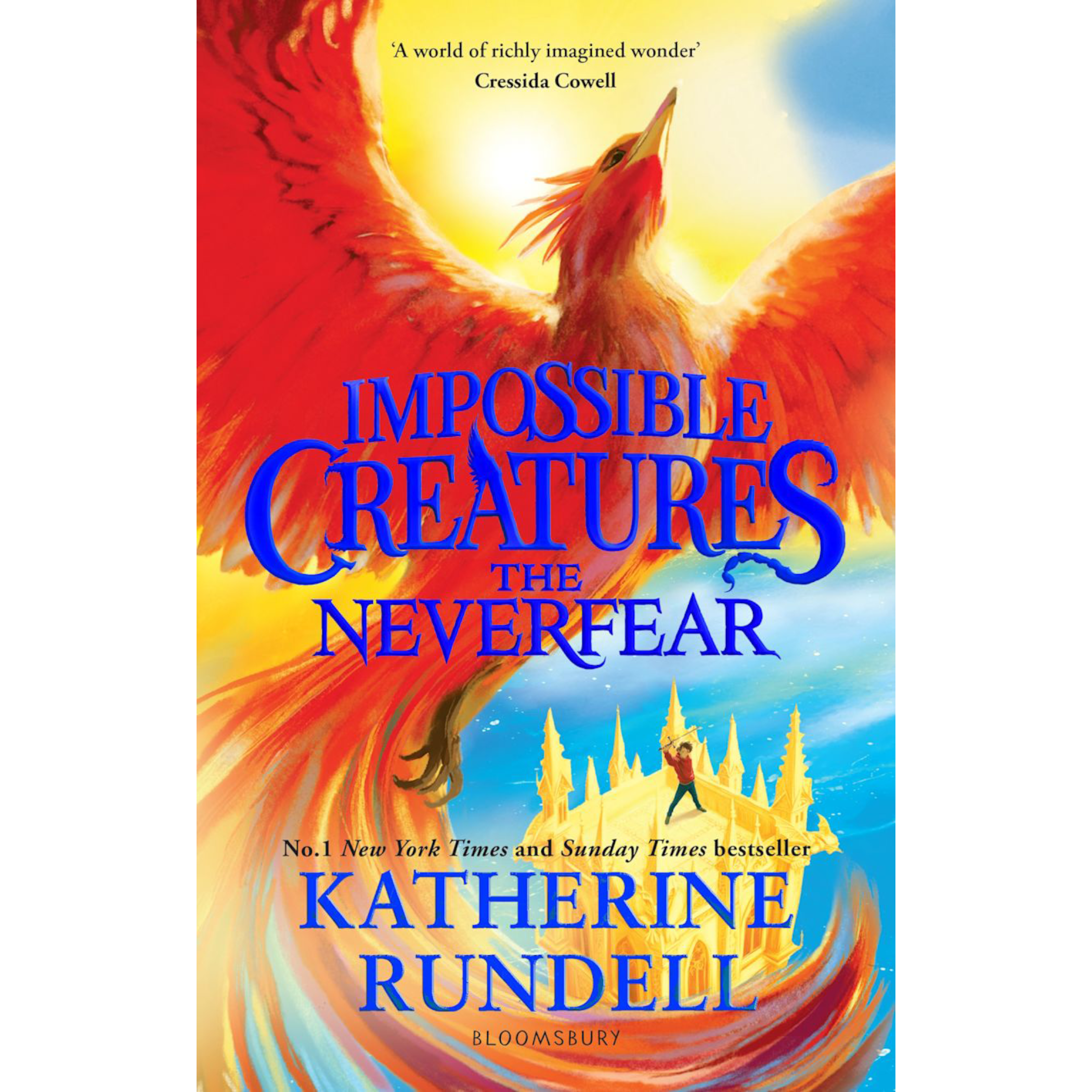
The Neverfear | By Katherine Rundell
It’s the Midsummer Feast on the Islet of Glimt and on this magical moonlit evening, the word on everyone’s lips is bandits. Reports of masked men burning villages are spreading throughout the Archipelago, but worse is still to come: Christopher and Anya are ambushed and one of the people they love most is kidnapped. The two children – alongside Ratwin the ratatoska and Jacques the Jaculus dragon – set sail on the Neverfear to recover three precious treasures.
Together they must face fearsome giants, win a daring race, and outwit deadly enemies to save those they love most.
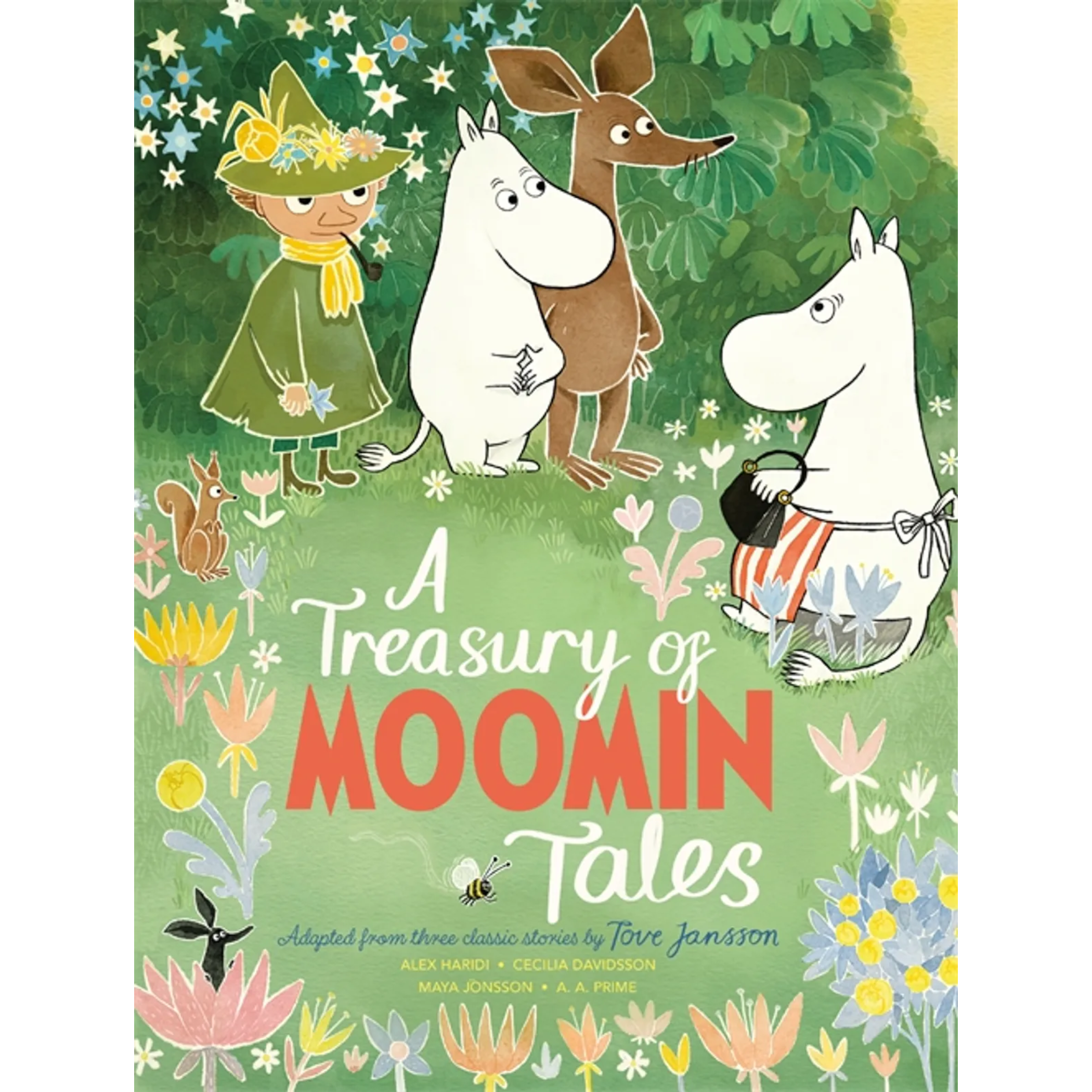
A Treasury of Moomin Tales: Adapted from three classic stories by Tove Jansson | By Tove Jansson, Alex Haridi & Cecilia Davidsson
A Treasury of Moomin Tales is a beautifully illustrated collection of three classic Moomin stories, based on Tove Jansson’s original works.
Join Moomintroll, his charming family and his eclectic band of friends on a series of adventures in a picturesque land where anything can happen: a snow horse comes to life in the depths of a freezing winter, a stolen ruby leads to a trial set in the Moominhouse garden, and seeds planted on Midsummer's Eve sprout a crowd of electrical Hattifatteners! Moomin fans of all ages will delight at the stunning artwork that accompanies the lively, witty writing, and become fully immersed in the beautiful Moominvalley. Sensitively adapted for a younger audience by Alex Haridi and Cecilia Davidsson, A Treasury of Moomin Tales is a perfect gift and a must-have for fans of Tove Jansson’s enchanting world.
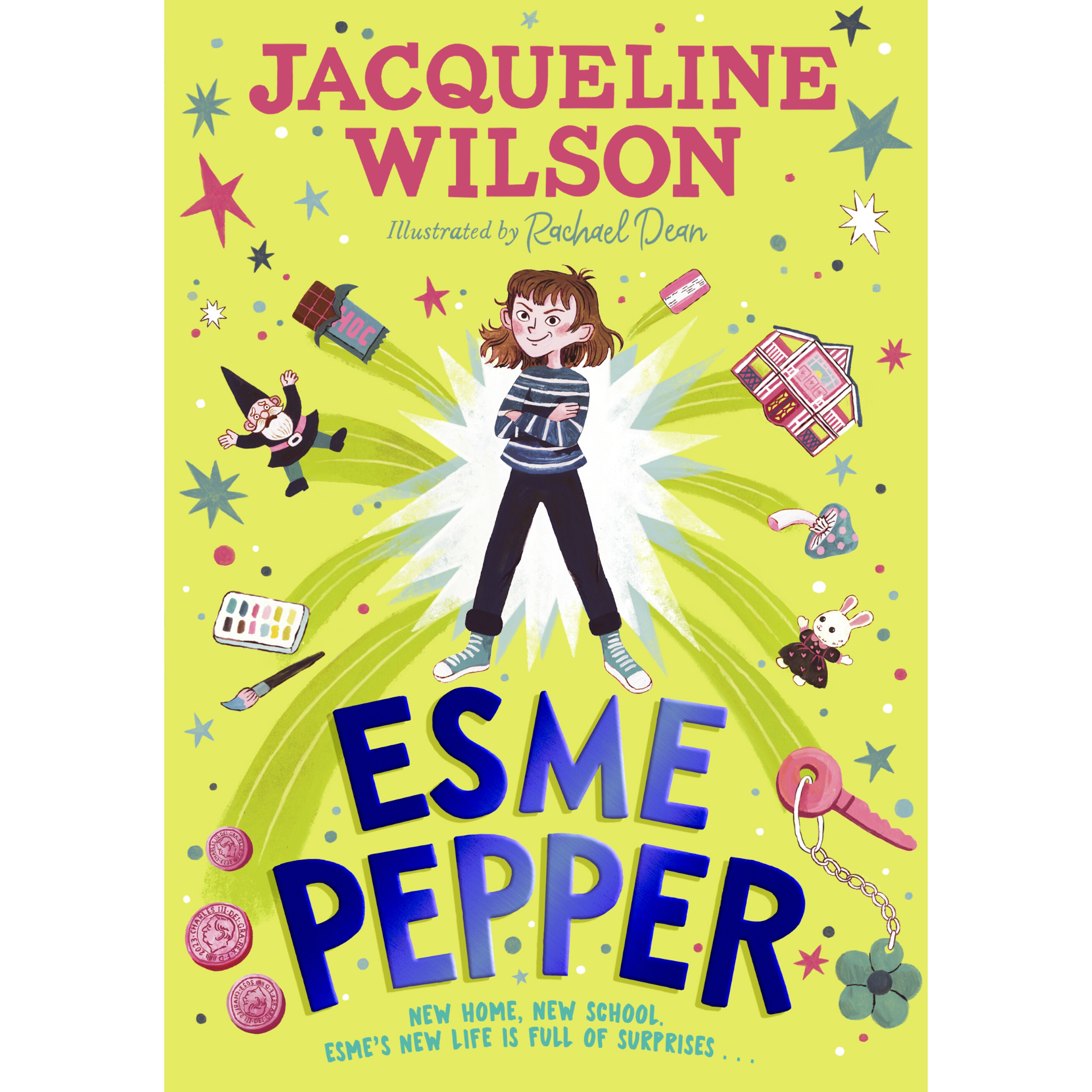
Esme Pepper | By Jacqueline Wilson | Illustrated by Rachael Dean
A funny, heartbreaking and hopeful story of one girl's resilience, from the author of the bestselling Tracy Beaker series. Esme's mum would do anything for her, including trying to steal the expensive dolls house that Esme desperately wants. When Mum gets caught, Esme has to go into foster care.
When a placement proves hard to find, Esme has to stay with an elderly couple who have retired from fostering. She knows she only has to stay until Mum gets back, but she still has to deal with a new school, and a real idiot of a class bully. Esme might like to cause trouble, but this time she is going to have to find a way to get along.
New & Featured
Children & Young Adults
New & Featured
Filters
No results found
No results match your search. Try removing a few filters.
Minihorror | By Barbi Markovic | Translated by Jen Calleja
A guest at a New Year's Eve rooftop party finds a parallel universe in the building next door. A woman discovers her boyfriend's family are all made of cookie dough. A man bites into a bar of Alpine chocolate to realise it's infested with maggots.
Mini and Miki live in Vienna. They are not from here, but they try their best to fit in and carve themselves the perfect middle class routine. Nevertheless - and perhaps because of it - there's something not quite right about the place.
Danger seems to lurk in every corner: a family breakfast, an office cubicle, a well-deserved holiday. Minihorror is a surreal, delightful and terrifying collection about the agents of fear in our society from the most original and imaginative of a new generation of European writers - to read it is to feel at once caught-out and understood. Barbi Markovic dares to ask: could the real horror story be life itself?